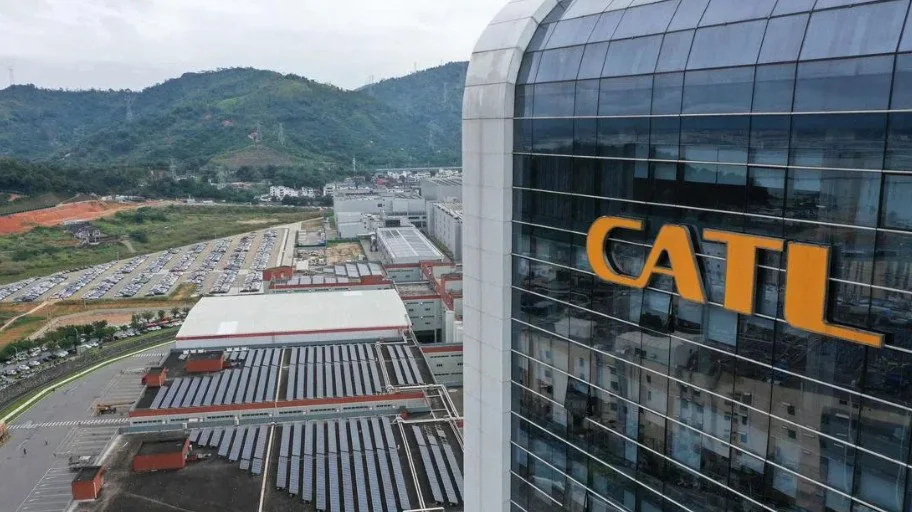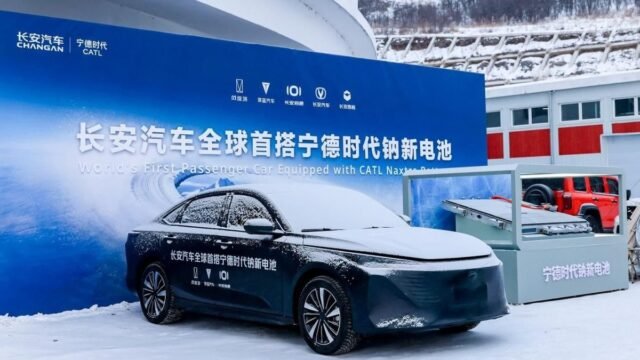
CATL’s sodium-ion battery story is moving from laboratory promise to industrial planning. The company’s proposed Fuding expansion suggests that sodium chemistry is being prepared as a real production category, especially for cost-sensitive and grid-adjacent applications.
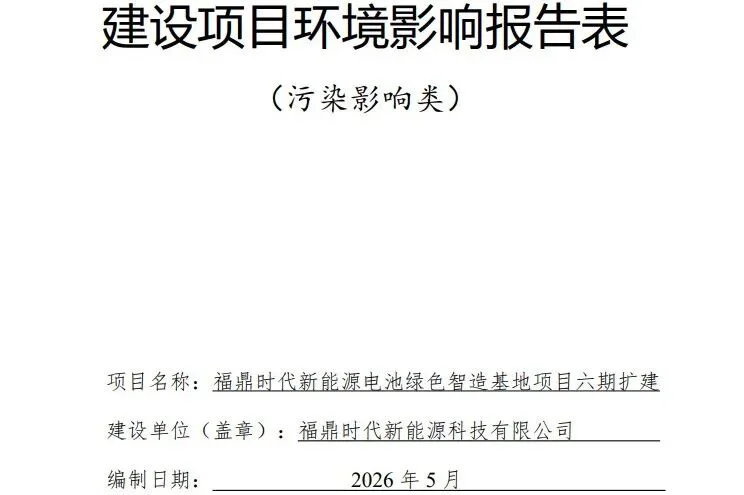
Factory scale and investment details are based on IT Home coverage of CATL’s Fuding sodium-ion battery expansion and Sina Finance reporting on the environmental filing.
A 5 Billion RMB Expansion, About $690 Million
IT Home reported that CATL’s Fuding Times sodium-ion battery green intelligent manufacturing base Phase VI expansion involves about 5 billion RMB of investment, roughly $690 million at a 7.25 RMB/USD reference rate. Sina Finance also covered the environmental filing, which describes new workshops and supporting facilities tied to sodium-ion battery manufacturing.
Capacity Target Points to 40 GWh
The same IT Home report states that the project is expected to add 40 GWh of sodium-ion battery capacity. That scale is the reason this story matters: sodium-ion is no longer only a chemistry demo if capacity planning reaches tens of gigawatt-hours.
Why Sodium-Ion Fits CATL’s Portfolio
Sodium-ion batteries trade lower energy density for lower raw-material pressure, better cost potential, and useful cold-weather characteristics. In earlier coverage of CATL’s sodium-ion technology, the company positioned sodium chemistry as part of a broader battery portfolio rather than a direct replacement for lithium-ion across every segment.
Commercialization Still Needs Proof
The key question is not whether CATL can announce capacity. It is whether the chemistry can achieve stable cost, cycle life, and automaker adoption at scale. The Fuding plan gives sodium-ion a much more credible industrial base, but customers and deployed products will determine how quickly it becomes part of mainstream EV and energy-storage supply.
Why It Matters Globally
CATL’s 40 GWh sodium-ion battery expansion is a signal that the global battery industry is preparing for a multi-chemistry future. Sodium-ion cells are not a lithium replacement across the board — their lower energy density makes them less suitable for long-range passenger EVs — but they offer a compelling cost and supply-chain case for energy storage systems, entry-level urban vehicles, and two-wheelers. Sodium is abundant, geographically distributed, and not subject to the same concentration risks as lithium, cobalt, or nickel. If CATL can deliver sodium-ion cells at scale with competitive cycle life, the chemistry could reshape cost curves across multiple battery segments and reduce the industry’s exposure to lithium price volatility.
Frequently Asked Questions
What is the advantage of sodium-ion batteries over lithium-ion?
Sodium-ion batteries use sodium, one of the most abundant elements on Earth, instead of lithium. This reduces raw-material cost and supply-chain risk. Sodium-ion cells also perform better in cold temperatures. However, they have lower energy density than lithium-ion cells, making them better suited for stationary storage and entry-level EVs rather than long-range passenger cars.
How much is CATL investing in sodium-ion production?
CATL’s Fuding Times Phase VI expansion involves approximately 5 billion RMB (about $690 million) and is expected to add 40 GWh of annual sodium-ion battery production capacity.
When will CATL’s sodium-ion batteries enter mass production?
CATL has indicated that sodium-ion battery mass production is targeted for Q4 2026, with the 40 GWh Fuding capacity expected to come online within the same year.
Which applications are sodium-ion batteries best suited for?
Sodium-ion batteries are most competitive in energy storage systems (ESS), entry-level urban EVs, two-wheelers, and low-speed vehicles. Their lower cost and better cold-weather performance make them attractive for grid-scale storage and short-range mobility applications.