The 1,000-Line LiDAR Advantage
BYD’s rapidly advancing smart driving program, branded “God’s Eye” (Tian Shen Zhi Yan), is set to receive a major hardware upgrade in the form of 1,000-line lidar sensors developed in partnership with domestic supplier RoboSense. The new sensors, which emit 1,000 laser beams per scan line — roughly double the resolution of the 512-line units currently deployed on BYD’s Denza and Yangwang models — will begin appearing on production vehicles in late 2026.
Higher point-cloud density translates directly into better object detection at longer ranges, particularly critical for highway-speed autonomous driving. The 1,000-line lidar is expected to reliably detect small obstacles — such as tire debris or a fallen cargo item — at distances exceeding 200 meters, compared to approximately 120 meters for current-generation 512-line sensors. This capability is considered essential for certifying Level 3 (conditional eyes-off) and Level 4 (eyes-off, limited domain) autonomous driving functions.
BYD’s Smart Driving Scale Advantage
Unlike most competitors, BYD’s smart driving push is defined by sheer scale. The company has already deployed God’s Eye systems across more than 20 vehicle models, from the affordable Seagull hatchback to the premium Yangwang U8 SUV. BYD claims its data collection fleet — essentially every God’s Eye-equipped vehicle on the road — is generating over 10 million kilometers of driving data per day, feeding the neural network training pipeline that underpins the system’s continuous improvement.
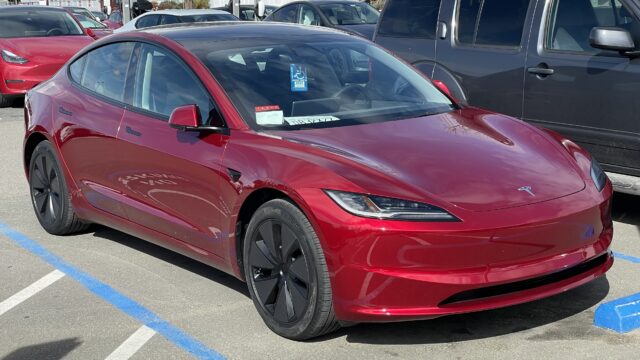
This data advantage is BYD’s strongest card in the smart driving race. While companies like Tesla and XPeng rely on pure-vision approaches, BYD’s sensor-fused architecture — combining lidar, high-definition cameras, and millimeter-wave radar — benefits from the redundancy and precision that multiple sensor modalities provide. The strategy is particularly well-suited to China’s complex urban driving environment, where unpredictable pedestrian and two-wheeler behavior demands robust perception.
L3/L4 Certification Timeline
BYD is targeting Level 3 highway autonomy certification from Chinese regulators by the end of 2026, with the first production models capable of eyes-off highway driving expected to launch in the Yangwang and Denza premium lineups. Level 4 capability — which would allow fully autonomous operation on designated highways without driver supervision — is projected for 2027.
The company is also exploring the integration of Huawei’s Qiankun ADS (Autonomous Driving System) as an alternative smart driving stack for certain models, reflecting a pragmatic “dual-track” approach. BYD’s in-house God’s Eye system would cover mass-market vehicles, while Huawei’s proven ADS could serve as a premium option for top-tier models, hedging against development risk while maximizing market coverage.
Why It Matters Globally
BYD’s God’s Eye LiDAR upgrade carries global significance beyond the Chinese market. As the world’s largest NEV manufacturer, BYD’s autonomous driving capabilities will eventually reach export markets across Europe, Southeast Asia, and Latin America. The 1,000-line LiDAR sensor, likely to be adopted by other automakers through RoboSense’s supply chain, sets a new benchmark for perception hardware that Western competitors including Mobileye and Waymo will need to match. Moreover, BYD’s data-driven approach — collecting 10 million km daily from a fleet that dwarfs any Western automaker’s — could give Chinese autonomous driving systems a structural advantage in training quality that compounds over time.
Frequently Asked Questions
What is BYD God’s Eye and how does it work?
God’s Eye (天神之眼) is BYD’s in-house smart driving system that combines LiDAR, high-definition cameras, and millimeter-wave radar for autonomous driving. It uses a sensor-fused architecture rather than a pure-vision approach, providing redundancy and precision that helps handle complex driving scenarios. The system is already deployed across 20+ BYD vehicle models.
When will BYD vehicles have Level 4 autonomous driving?
BYD is targeting Level 3 highway autonomy certification by end-2026, with Level 4 (fully autonomous operation on designated highways without driver supervision) projected for 2027. The first L3/L4-capable models will launch in BYD’s premium Yangwang and Denza lineups.
How does the 1,000-line LiDAR compare to Tesla’s approach?
BYD uses a sensor-fused architecture (LiDAR + cameras + radar) while Tesla relies on a pure-vision approach without LiDAR. BYD’s 1,000-line LiDAR provides 200+ meter detection range for small obstacles, offering hardware-level redundancy. The debate between these approaches remains unsettled — Tesla argues vision-only is sufficient with enough data, while BYD’s approach provides more sensor-level safety guarantees.
Is God’s Eye available outside China?
Currently, God’s Eye is primarily deployed in China, but as BYD expands globally with models like the Atto 3, Seal, and Yangwang U8 in Europe and other markets, the system is expected to follow — subject to regional autonomous driving regulations. BYD will need separate certifications for each market.
Related Coverage
- Huawei AITO M6 Adds $34K BEV With In-Cabin LiDAR — Another major Chinese automaker integrating LiDAR into affordable EVs
- Li Auto Unveils Maho M100 Chip: World’s First Dynamic Data-Flow AI Chip — How Chinese automakers are building their own autonomous driving chips
Sources
- CnEVPost, BYD God’s Eye smart driving system upgrade and LiDAR roadmap, May 2026
- 36Kr, Analysis of BYD’s autonomous driving strategy and sensor supplier partnerships
- Gasgoo, RoboSense 1,000-line lidar specifications and BYD partnership
- Reuters, Global autonomous driving regulation and Chinese automaker expansion