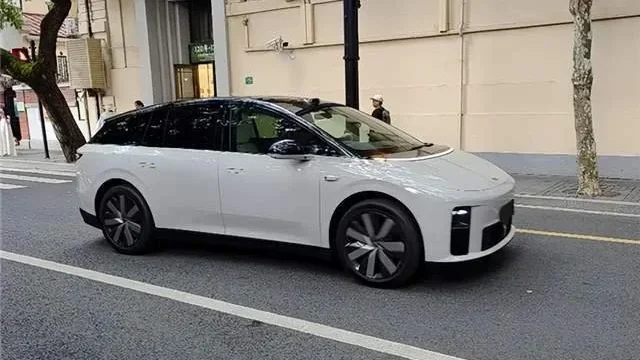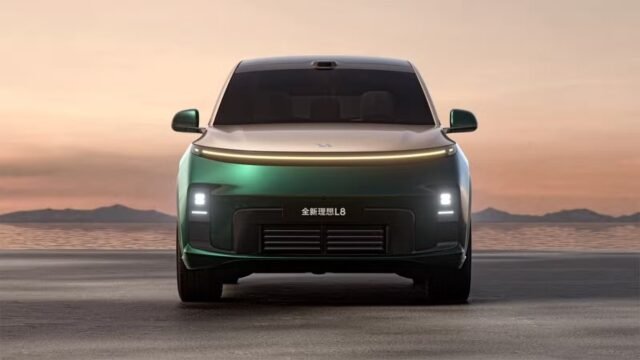
Li Auto’s flagship SUV has been comprehensively re-engineered for 2026, adding 800V active suspension, steer-by-wire, a 72.7kWh battery, and 2,560 TOPS of computing power — all while maintaining the family-focused DNA that made the original a phenomenon.
Pricing and specifications are based on Li Auto official release materials.
The new Li Auto L9 Livis — a comprehensively re-engineered flagship SUV
Delivering on the Promise
On May 15, Li Auto officially launched the new L9 Livis — its most technologically advanced vehicle to date — and began deliveries just two days later in Changzhou and Hangzhou. Priced at ¥459,800 for the standard Ultra and ¥559,800 for the Livis edition, the new flagship represents Li Auto’s answer to a wave of large premium SUVs flooding the Chinese market in 2026.
The original Li L9, launched in June 2022, was nothing short of a phenomenon. It delivered over 10,000 units in its first full month of sales and established the ‘family SUV’ segment that competitors have since rushed to emulate. The ‘refrigerator, TV, and sofa’ package that Li Auto pioneered has become the de facto standard for Chinese premium SUVs — a testament to founder Li Xiang’s product intuition.
But as Li Xiang himself noted on social media, the phrase ‘understand Li Auto, question Li Auto, become Li Auto’ has become an industry joke with a painful edge. The new L9 Livis must not only surpass its predecessor but also build technical barriers that make emulation genuinely difficult.
800V Active Suspension: Beyond Comfort
The headline technology is the 800V active suspension system, which Li Auto claims can deliver a ride quality comparable to ultra-luxury brands. In demonstrations, the system absorbs potholes with near-imperceptible cabin disturbance, suppresses body roll during cornering, and eliminates nose-dive during braking. Each corner can generate over 10,000 Newtons of lifting force.
But the most intriguing capability is the system’s off-road utility. In sand, a mildly stuck vehicle can literally ‘bounce’ itself free using the active suspension. In deeper entrapment, the system can automatically lift individual wheels to insert recovery boards. This transforms the L9 from a pure on-road family hauler into something approaching a capable adventure vehicle.
The L9 Livis also features a fully steer-by-wire chassis with four-wheel steering, reducing the turning radius of this 5,255mm-long vehicle to just 5.4 meters. The electromechanical brake system (EMB) provides redundancy such that a single functioning brake can safely stop the vehicle even if the other three wheels lose braking capability.
Electrified to the Core
Under the floor, the L9 Livis packs a 72.7kWh battery delivering 420km of CLTC pure electric range, more than double the original L9’s 215km. Combined range reaches 1,650km, and the 5C charging system accepts up to 420kW peak power, enabling a 10-80% charge in just 10 minutes. The new 1.5T range extender achieves a WLTC fuel consumption of 6.3L/100km — a 20% improvement over the outgoing model.
The computing architecture is equally ambitious: dual self-developed 5nm Mach 100 chips deliver 2,560 TOPS of total computing power, supporting full-scenario Navigation on Autopilot (NOA) covering highways, urban expressways, and city streets. Four LiDAR sensors — up from one on the previous generation — provide comprehensive environmental perception.
Li Auto has also committed to building 8,300 5C supercharging stations by the end of 2026, addressing the infrastructure anxiety that has historically made range-extended vehicles more appealing than pure EVs for family use. With a 10-minute charge providing 336km of range, the company argues that range anxiety for the L9 Livis is effectively eliminated.
The Competitive Landscape
The L9 Livis enters a market that has transformed dramatically since the original L9’s debut. Over a dozen flagship SUVs from Chinese brands have launched in the first half of 2026 alone, including XPeng’s GX, BYD’s Tang L, and the upcoming 2026 AITO M9. Each brings its own technological differentiator — XPeng’s autonomous driving, BYD’s scale and pricing, AITO’s Huawei ecosystem.
Li Auto’s counter-strategy is to double down on the integrated family experience. The Livis edition features a single continuous front display, electrically adjustable rear-seat entertainment screen, and what Li Xiang calls ‘luxurious relaxation’ — a design philosophy where every element serves the comfort of all six occupants. The dual-tone paint with hand-polished gold waistline and triple-layer coating signals a deliberate move upmarket.
At ¥559,800, the Livis is Li Auto’s most expensive vehicle ever, testing the brand’s pricing power at a time when competitors are aggressively cutting prices. The L9 Livis must succeed not just as a product but as a statement that Li Auto can command premium pricing in an increasingly commoditized segment.
Sources
- Li Auto, Official L9 Livis media center release
- Li Auto, Premium Smart Electric Vehicles official site
- Sina Finance, 一篇文章读懂全新理想L9 Livis的800V主动悬架
- CarNewsChina, Li Auto launches new L9 flagship SUV with active suspension