CATL’s 2025 annual report showed operating revenue of RMB 423.7 billion (about $58.4 billion) and net profit of RMB 72.2 billion (about $10.0 billion), with lithium-ion battery sales rising to 661 GWh.
Financial figures are based on CATL’s official 2025 annual report release, with revenue and profit cross-checked against ESS News and Battery-Tech Network.
Financial Firepower: About $58.4B Revenue and $10B Profit
According to CATL’s official 2025 annual report release, revenue reached RMB 423.7 billion (about $58.4 billion), up 17% year over year, while net profit attributable to shareholders reached RMB 72.2 billion (about $10.0 billion), up 42%. R&D investment rose to RMB 22.1 billion, and lithium-ion battery sales reached 661 GWh, supporting CATL’s 39.2% global power-battery market share.
Extreme Manufacturing: The 99.99% Yield Rate Moat
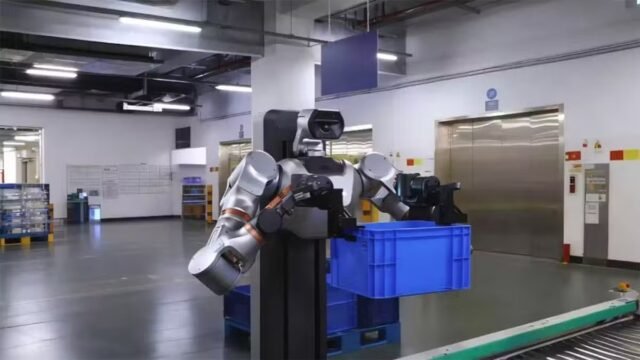
The single most formidable competitive advantage CATL possesses is its manufacturing capability, which the company has branded “extreme manufacturing.” The numbers are almost unbelievable: defect rates measured in parts per billion (PPB), equivalent to a 99.99% yield rate; a single production line capable of producing one battery cell every 1.7 seconds; and per-line capacity that has increased 150% through continuous optimization. Each production line is monitored by over 3,000 sensors feeding data into AI algorithms that optimize parameters in real-time. The Yibin factory has been recognized by the World Economic Forum as a “Lighthouse Factory” — a global benchmark for Industry 4.0 manufacturing. The economic significance of manufacturing quality is often underappreciated by outside observers. CATL’s internal analysis reveals that a 2% yield rate gap translates to approximately 1.6 billion RMB ($220 million) in evaporated profit for every 1 million vehicles produced. As EV production scales into the tens of millions globally, these manufacturing advantages compound into insurmountable competitive barriers. CATL’s manufacturing prowess means it can offer lower prices than competitors while maintaining higher margins — a business model that is effectively self-reinforcing.
Global Expansion 2.0: From Product Export to Supply Chain Colonization
CATL’s international strategy has evolved through three distinct phases. Phase 1 was product export — shipping battery cells from Chinese factories to overseas automakers. Phase 2, now well underway, is capacity export: the company’s Thuringia, Germany plant (1.8 billion euro investment, 14 GWh capacity, operational since 2023) and the Debrecen, Hungary mega-factory (7.34 billion euros, 100 GWh, Europe’s largest battery plant, operational since 2025) represent a physical commitment to serving Western markets from within. Phase 3, which CATL is now executing, is supply chain export: the Indonesia joint venture (5.97 billion USD investment) integrates nickel mining, smelting, precursor production, cathode manufacturing, and battery cell assembly in a single location, achieving end-to-end control of the value chain. This supply chain depth extends beyond manufacturing. CATL has locked in over 30% of global lithium resources, more than 50% of cobalt resources, and over 20% of nickel resources through long-term offtake agreements and equity investments. The company’s battery recycling capacity has reached 100,000 tons per year, completing the “mining to manufacturing to recycling” circular economy loop. CATL has also pioneered new business models: the EVOGO swappable battery blocks reduce vehicle purchase costs by 30-40%, the CIIC skateboard chassis compresses vehicle development cycles from 36 to 18 months, and the “battery bank” concept transforms batteries from disposable components into appreciating assets. Source: Sohu/Huoshan Industry Watch (sohu.com), May 21, 2026.