Quick Answer: Li Auto is the Chinese smart-EV company Li Xiang founded in 2015 after building Autohome. It scaled through family-focused extended-range electric SUVs, then added the MEGA, i8 and i6 battery EVs. By June 30, 2026, cumulative deliveries had reached 1,733,687. The transition is real but costly: 2025 profit fell sharply and the first quarter of 2026 produced a net loss.
Last verified: July 17, 2026. Delivery and charging-network figures are dated June 30, 2026; financial figures use full-year 2025 and first-quarter 2026 disclosures.
Page role: This is BYDToday’s single owner for Li Auto’s history, founder Li Xiang, EREV strategy and current model transition. Monthly sales and individual model reports remain supporting pages.
What is Li Auto?
Li Auto is a Beijing-based electric-vehicle manufacturer listed on Nasdaq and the Hong Kong Stock Exchange. The group was founded in April 2015. It first reached scale with extended-range electric vehicles, or EREVs: battery-electric drivetrains paired with a gasoline engine that generates electricity when needed. The engine does not mechanically drive the wheels.
That architecture solved a practical Chinese family-car problem. Buyers could drive electrically for routine trips while retaining a fuel-backed range option for long journeys or areas with uneven charging coverage. Li Auto packaged it in large, technology-heavy family SUVs rather than starting with a small compliance EV.
The company is no longer an EREV-only automaker. It now describes two product families: the L series of extended-range SUVs and a battery-electric group consisting of the MEGA MPV and i-series SUVs. Its strategic question is whether it can protect the profitable EREV base while building a competitive high-voltage BEV business.
Who is Li Xiang?
Li Xiang is Li Auto’s founder, chairman and chief executive. The company’s official biography says he has more than 25 years of experience founding and managing internet companies and approximately 20 years in the automotive industry. Before Li Auto, he founded Autohome and served as its president from 1999 to June 2015. He was also a director of NIO from May 2015 to September 2018.
A contemporary 2006 China Daily profile records the unconventional beginning behind that résumé. In 1999, at age 18, Li chose to focus on an internet business instead of attending university after building a high-school technology website. He later ran PCPOP, a computer-hardware information business. Autohome’s corporate history says its automotive website launched in 2005 and later listed on the New York Stock Exchange in 2013.
Those facts matter because Li Auto’s operating model carries over internet-company habits: direct user feedback, a concentrated product line, software-centered cabins and rapid iteration. They do not prove that every product decision is founder-led or that software can erase the economics of manufacturing vehicles.
| Date | Milestone | Why it matters | Evidence boundary |
|---|---|---|---|
| 1999 | Li Xiang focused on his internet business; the venture later developed into PCPOP. | Established his product-and-user background before automobiles. | Early-life account comes from a 2006 contemporary profile; later mythology is excluded. |
| 2005–2013 | Autohome launched its automotive site and later listed in New York. | Built Li’s automotive audience and public-company experience. | Autohome and Li Auto biographies are used for roles and dates. |
| April 2015 | The group that became Li Auto was founded. | Start of the vehicle company. | The corporate name changed from CHJ to Leading Ideal and then Li Auto. |
| 2019 | Li ONE entered volume production in November and customer deliveries began in December. | Validated the family EREV thesis. | Production and delivery are separate milestones. |
| July 2020 | Li Auto listed American depositary shares on Nasdaq. | Funded expansion and created recurring public disclosure. | Hong Kong listing followed later. |
| 2022–2024 | The L9, L8, L7 and L6 expanded the EREV SUV range; MEGA began the BEV chapter. | Moved Li Auto from one model to a product family. | Launch dates do not imply that original trims remain on sale in 2026. |
| 2025–2026 | i8 and i6 BEVs launched; all-new L9 and L8 refreshed the EREV base. | Created a two-powertrain transition rather than abandoning EREV. | Model status and prices below are tied to dated releases. |
How Li Auto’s EREV system works
An EREV uses electric motors to propel the vehicle. A battery supplies the motors, while a gasoline engine and generator can produce electricity when battery state or driving conditions require it. Because the engine is not mechanically connected to the wheels, the driving feel remains closer to a battery EV than to a conventional parallel hybrid.
The customer advantage is flexibility: electric urban driving without making long-distance travel depend entirely on chargers. The trade-offs are equally real. An EREV carries a battery, fuel system, engine and generator, so it has more components and mass than a pure BEV. Fuel consumption and emissions still occur when the range extender runs, and official CLTC figures do not predict every owner’s real-world use.
| Question | Li Auto EREV | Li Auto BEV | Decision boundary |
|---|---|---|---|
| What drives the wheels? | Electric motors. | Electric motors. | The EREV gasoline engine generates electricity; it does not drive the wheels. |
| Energy carried | Battery plus gasoline. | Battery only. | EREV flexibility comes with extra hardware and fuel use. |
| Best fit | Long trips, variable charging access and buyers wanting a fuel fallback. | Reliable home/public charging and buyers wanting zero tailpipe emissions in use. | Actual efficiency depends on charging behavior, route and temperature. |
| Li Auto products | L9, L8, L7 and L6. | MEGA, i8 and i6. | Check model-year specifications before comparing trims. |
| Strategic role | Current installed base and cash-generating family-SUV franchise. | Long-term platform expansion and high-voltage fast-charging growth. | BEV expansion does not mean an immediate end to EREV. |
Li Auto’s 2026 model lineup
The lineup is easier to understand by separating current verified milestones from older launch specifications. The all-new L9 and L8 are 2026 products. The i8 and i6 entered the market in 2025. L7, L6 and MEGA remain important nameplates, but buyers should check the live China configurator because prices and trim availability can change faster than an owner page.
| Model | Powertrain / format | Latest verified milestone | Dated price evidence | What to verify before buying |
|---|---|---|---|---|
| L9 | EREV; six-seat flagship SUV | All-new L9 launched in May 2026 with a 72.7-kWh 5C battery and third-generation range extender. | Ultra RMB459,800; Livis RMB509,800. | One versus two M100 chips and LiDAR count differ by trim. |
| L8 | EREV; five-seat flagship SUV | All-new L8 launched June 23, 2026 with fully drive-by-wire architecture. | Ultra RMB369,800; Livis RMB429,800. | Confirm delivery timing and locally available options. |
| L7 | EREV; five-seat SUV | Part of the current L-series family. | Use current configurator; no 2026 launch price asserted here. | Do not compare an older media price with a new model year. |
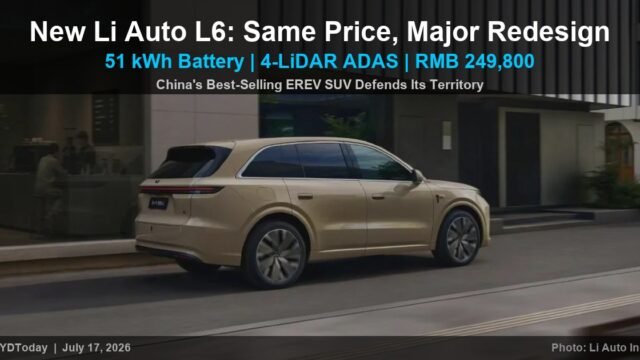
| L6 | EREV; five-seat SUV | A new L6 was planned for July 2026 in the June 30 delivery update. | Pending the new product release. | Treat pre-launch specifications as provisional. |
| MEGA | BEV; seven-seat MPV | Li Auto’s first series-production battery EV and first 5C flagship. | Use current configurator. | Charging curve, route conditions and MPV dimensions. |
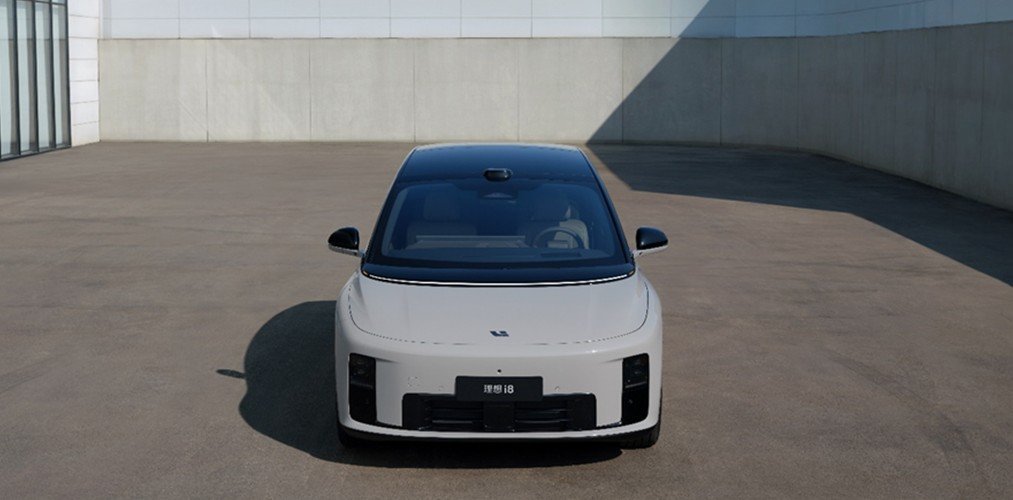
| i8 | BEV; six-seat SUV | Launched July 29, 2025; customer deliveries began August 20. | Launch range RMB321,800–369,800. | Battery, wheel and trim choice change range and charging. |
| i6 | BEV; five-seat SUV | Launched September 2025; cumulative production exceeded 150,000 by June 2026. | Standard launch price RMB249,800. | Use current trim and delivery information. |
Why the BEV transition is more than adding a battery
The MEGA launch showed that fast charging alone does not guarantee product-market fit. Li Auto then expanded its proprietary high-voltage platform and 5C charging network around the i8 and i6. At June 30, 2026, it reported 4,097 supercharging stations with 22,593 charging stalls.
The i8 launched with 90.1-kWh and 97.8-kWh battery options and company-stated CLTC ranges of 670 and 720 kilometers. Li Auto claimed its 5C system could add 500 kilometers of CLTC range in 10 minutes under test conditions. These are standardized and company-reported figures, not a promise of identical road performance.
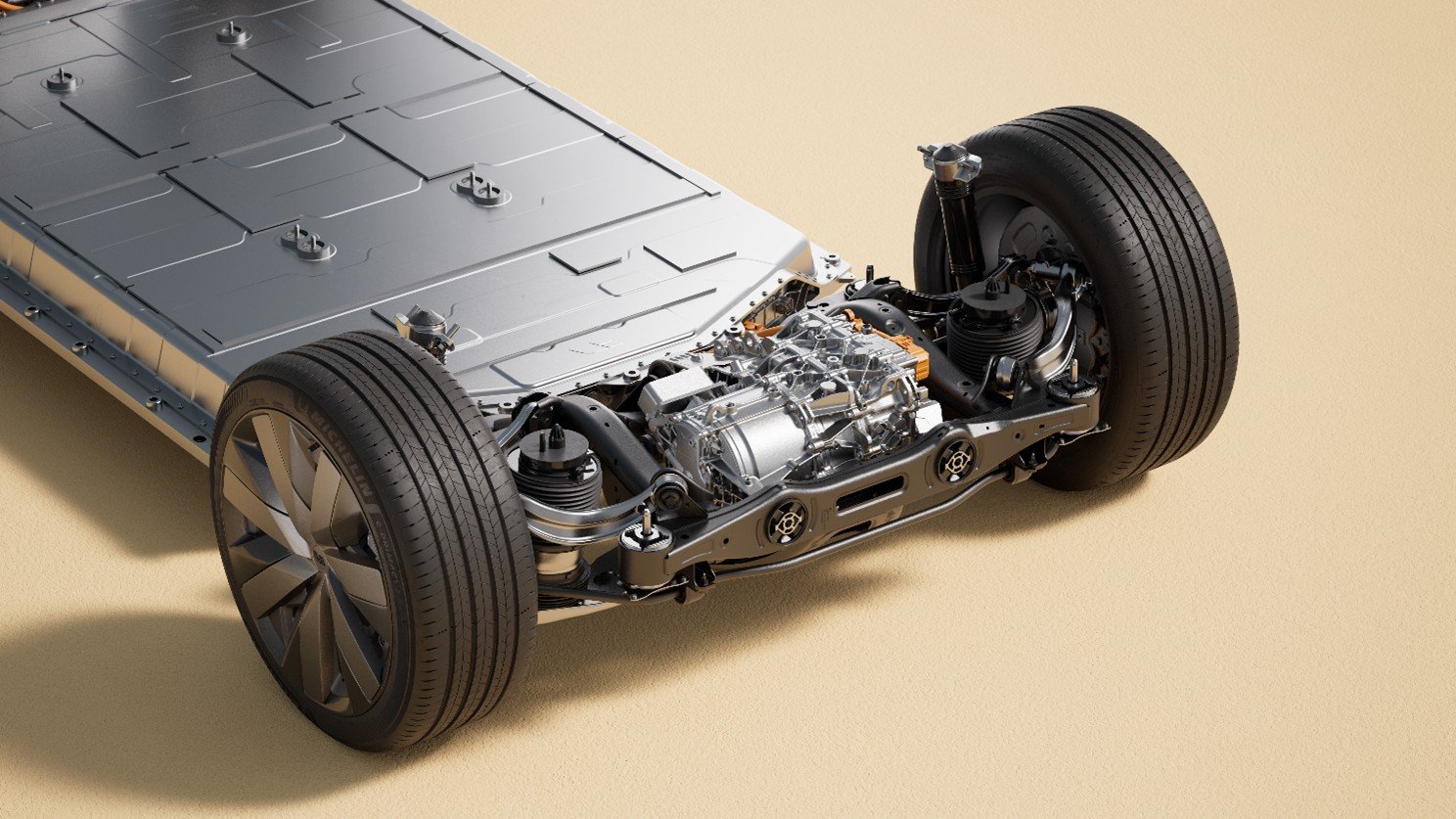
Li Auto’s BEV platform combines the battery, thermal system, electric drive, chassis and software stack. That integration can improve packaging and charging performance, but it raises capital requirements and exposes the company to direct competition from established battery-EV makers. Infrastructure must also extend beyond flagship routes to support mainstream i6 volume.
2025 and 2026 financial reality
Li Auto remained profitable for full-year 2025, but the direction deteriorated sharply. Deliveries fell to 406,343 and revenue declined 22.3% to RMB112.3 billion. Vehicle margin dropped from 19.8% in 2024 to 17.9%, while net income fell 85.8% to RMB1.14 billion. Operating cash flow and free cash flow both turned negative.
The first quarter of 2026 was harder. Deliveries grew 2.5% year over year to 95,142, yet revenue fell 11.4% to RMB23.0 billion. Vehicle margin compressed to 6.1%, and Li Auto recorded a RMB2.28 billion net loss. A delivery recovery therefore cannot be read as a completed profitability recovery.
| Metric | 2024 | 2025 | Q1 2026 | Correct interpretation |
|---|---|---|---|---|
| Deliveries | 500,508 | 406,343 | 95,142 | Q1 was up 2.5% year over year, not a return to the 2024 annual pace. |
| Revenue | RMB144.5bn | RMB112.3bn | RMB23.0bn | 2025 fell 22.3%; Q1 2026 fell 11.4% year over year. |
| Vehicle margin | 19.8% | 17.9% | 6.1% | Product transition and pricing pressure materially reduced unit economics. |
| Net income / loss | RMB8.05bn income | RMB1.14bn income | RMB2.28bn loss | Full-year 2025 stayed profitable; Q1 2026 did not. |
| Free cash flow | Positive | RMB12.82bn outflow | RMB7.39bn outflow | BEV, product and network investment increased the cash burden. |
What Li Auto’s AI strategy does—and does not mean
Li Auto increasingly describes itself as an AI company, with in-vehicle assistants, driver-assistance models, computing hardware and embodied-intelligence research connected to its vehicle platform. The all-new L9 and L8 use the company’s MindVLA and 3DViT architecture, with hardware varying by trim.
The safe interpretation is product integration, not autonomous-driving approval. Marketing labels such as VLA, “AI agent” or intelligent driving do not establish hands-free legality, capability in every condition or equal hardware across the lineup. For a wider context, see BYDToday’s China driver-assistance comparison and China EV AI race analysis.
Is Li Auto available outside China?
Li Auto is best treated as a China-market manufacturer unless an official local sales, homologation, warranty and service announcement says otherwise. Search interest in the United States and United Kingdom does not equal retail availability. Imported vehicles can lack local warranty, charging compatibility, connected services, parts support or regulatory approval.
For company comparisons, start with the Chinese EV startup owner. China’s EV charging network explained provides additional infrastructure context.
What to watch next
- EREV renewal: whether all-new L9, L8 and L6 can restore margin without weakening volume.
- BEV repeatability: whether i6 demand can be sustained after the initial production milestone and whether i8 broadens the premium base.
- Cash discipline: whether operating and free cash flow improve after the heavy 2025–2026 transition.
- Charging utilization: station count is useful only if location, reliability and vehicle adoption create enough use.
- Hardware clarity: buyers should verify chips, sensors, battery and software eligibility at trim level.
- Overseas readiness: real expansion requires official retail, service, data and homologation infrastructure.
Explore the wider system: Use the China NEV Knowledge Hub to move between company and founder Owners, technologies, vehicles and markets.
Frequently Asked Questions
What is Li Auto?
Li Auto is a Chinese smart-EV manufacturer founded in 2015. It sells extended-range electric L-series SUVs and battery-electric MEGA and i-series vehicles.
Who founded Li Auto?
Li Xiang founded Li Auto and remains its chairman and chief executive. Before Li Auto, he founded Autohome and served as its president until June 2015.
What is a Li Auto EREV, and does gasoline drive the wheels?
A Li Auto EREV is driven by electric motors. Its gasoline engine generates electricity for the battery and motors; it is not mechanically connected to the wheels.
Is Li Auto profitable?
Li Auto reported a RMB1.14 billion net profit for full-year 2025, down 85.8% from 2024. It then reported a RMB2.28 billion net loss for the first quarter of 2026.
Which Li Auto models are battery-electric?
The MEGA MPV, i8 SUV and i6 SUV are battery-electric. The L9, L8, L7 and L6 use extended-range electric powertrains.
Can you buy Li Auto vehicles in the United States or United Kingdom?
Li Auto should be treated as a China-market brand unless it announces official local sales and support. Search interest or privately imported vehicles do not establish local retail, warranty or service coverage.
Sources
- Li Auto, Li Xiang official biography
- Li Auto, company history and listing prospectus
- Li Auto / SEC, 2025 Form 20-F
- Li Auto, fourth-quarter and full-year 2025 results
- Li Auto, first-quarter 2026 results and all-new L9 update
- Li Auto, June 2026 delivery and charging-network update
- Li Auto, all-new L8 launch, June 23, 2026
- Li Auto, Li i8 launch, July 29, 2025
- Li Auto, third-quarter 2025 results and i6 launch evidence
- Autohome, official company history
- China Daily, contemporary 2006 profile of Li Xiang
- BYDToday, Source Methodology and Editorial Policy