Quick Answer: Geely was founded by Li Shufu in 1986 and entered carmaking in 1997. Today, Zhejiang Geely Holding Group sits above several different companies: Hong Kong-listed Geely Auto controls Geely, Lynk & Co and Zeekr, while Volvo Cars, Polestar and Lotus retain separate listed-company structures. “One Geely” integrates technology and operations; it does not make every portfolio brand the same legal entity.
Last verified: July 17, 2026. Ownership and operating relationships use Geely Holding, Geely Auto, Volvo Cars, Polestar, Lotus and Hong Kong exchange disclosures available on that date.
Page role: This is BYDToday’s single owner for the Geely group and founder Li Shufu. Existing Geely sales, export, Galaxy, Zeekr and Lynk & Co articles remain supporting pages rather than competing group-history URLs.
What is Geely—and which Geely does a number describe?
“Geely” can mean three different things. Zhejiang Geely Holding Group is the privately controlled parent and investment group founded by Li Shufu. Geely Automobile Holdings Limited, stock code 0175.HK, is the Hong Kong-listed passenger-vehicle company. Geely Auto is also a consumer vehicle brand inside that listed company. Confusing those layers produces false ownership and sales claims.
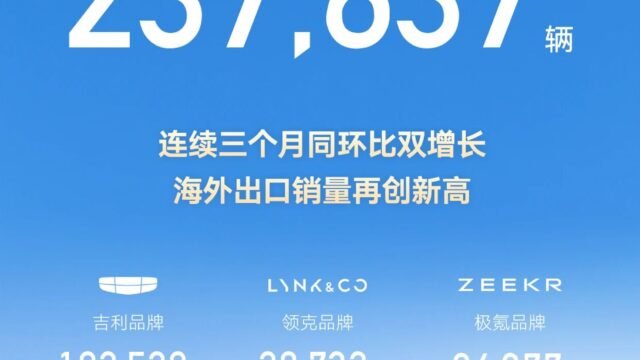
Geely Holding reported 4,116,321 aggregate vehicle sales for 2025 across its broad automotive portfolio, including passenger cars and commercial vehicles. It reported 2,293,099 electrified and clean-alternative-fuel vehicles, equal to 56% of that total. Geely Auto reported a narrower 3,024,567 vehicles and 1,687,767 electrified or new-energy vehicles. Zeekr and Lynk & Co are consolidated in the Geely Auto figure, so adding their sales again would double count them.
The distinction also applies to revenue, profit and debt. Financial results for Geely Auto, Volvo Cars, Polestar or Lotus Technology belong to different listed reporting groups. Geely Holding’s portfolio announcement is useful for strategic scale, but it is not a consolidated Geely Auto income statement.
Who is Li Shufu?
Li Shufu, also known internationally as Eric Li, was born in 1963 and founded the business that became Geely Holding. Volvo Cars lists him as founder and chairman of Zhejiang Geely Holding Group and chairperson of the Volvo Cars board. Its official biography records a bachelor’s degree in management engineering and a master’s degree in mechanical engineering.
Geely’s own history dates the entrepreneurial start to 1986, initially in refrigerator parts. The company entered motorcycles in 1994 and the automotive industry in 1997. The first Geely Haoqing car left the line in 1998, and Geely later became the first privately owned Chinese automaker admitted to the national vehicle-manufacturer catalogue.
Li’s current relevance is larger than a founder biography. His ownership and board positions connect Geely Holding, Volvo Cars and several investment vehicles associated with Polestar, Lotus, ECARX and smart. That does not mean he personally owns every brand without minority investors or public shareholders. The accurate description is founder and controlling figure of the wider Geely ecosystem, with each company’s legal structure checked separately.

The Geely brand and ownership map
| Company or line | Main brands | Relationship | Reporting boundary |
|---|---|---|---|
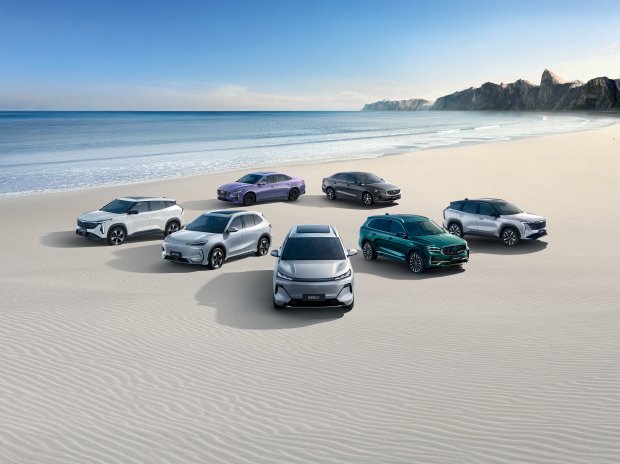
| Geely Auto, 0175.HK | Geely, Geely Galaxy, Lynk & Co, Zeekr | Geely Holding is the lead shareholder; Zeekr became a wholly owned subsidiary in December 2025. | Hong Kong-listed passenger-vehicle group; consolidates Zeekr and Lynk & Co. |
| Volvo Cars, Stockholm-listed | Volvo | Geely Sweden Holdings remained the largest shareholder at 78.65% in the latest cited report. | Separate listed company with its own board, results and public shareholders. |
| Polestar, Nasdaq-listed | Polestar | Supported by Geely Sweden, Volvo Cars and Li-controlled PSD Investment; filings identify Li Shufu as the effective controlling person. | Separate public company; not a Geely Auto brand-sales line. |
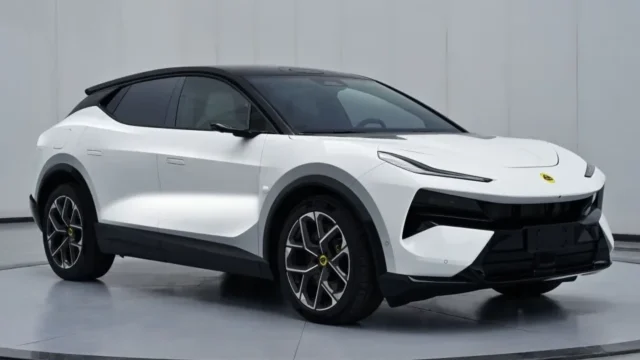
| Lotus group and Lotus Technology | Lotus Cars | Geely acquired 51% of Lotus Group in 2017; later filings show control through several Geely- and Li-linked entities. | Lotus Technology is separately Nasdaq-listed; ownership is more complex than one 51% slogan. |
| PROTON | Proton | Geely holds a 49.9% strategic stake alongside Malaysian majority owner DRB-HICOM. | Its vehicle sales are included only when Geely Holding publishes aggregate portfolio totals. |
| smart joint venture | smart | 50:50 joint venture between Mercedes-Benz and Geely Holding. | Joint company, not a wholly owned Geely Auto unit. |
| Farizon commercial vehicles | Farizon | Commercial-vehicle business within the wider Geely Holding portfolio. | Outside the core Geely Auto passenger-brand comparison. |
Two common mistakes follow from this map. Volvo Cars is not the same company as Sweden’s AB Volvo truck group, and Geely’s investment relationship with Mercedes-Benz does not make Mercedes-Benz a Geely brand. The word “portfolio” can describe strategic influence without implying 100% ownership or one accounting perimeter.
How the Volvo acquisition changed Geely
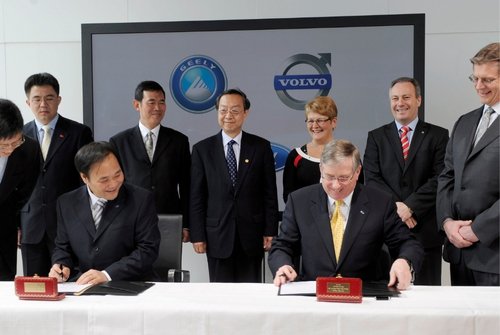
Geely Holding completed its purchase of Volvo Cars from Ford in 2010 for about US$1.8 billion. The transaction gave a Chinese private automaker control of a global premium car company with deep safety, engineering and international manufacturing capabilities. Volvo Cars continued to operate with its own brand, management and product development rather than becoming a rebadged Geely line.
The industrial influence ran in both directions. Shared architecture, engineering and procurement capabilities helped create CMA-based products and Lynk & Co, while Volvo gained capital and access to Chinese production and demand. In 2021, Volvo Cars listed shares in Stockholm, leaving Geely Sweden as the controlling shareholder rather than the sole shareholder.
Acquisitions and partnerships that built the portfolio
| Year | Transaction or move | What Geely gained | What it did not mean |
|---|---|---|---|
| 2010 | Acquired Volvo Cars from Ford | Control of a global premium carmaker and a platform for engineering collaboration. | Volvo Cars did not become the Geely consumer brand. |
| 2016 | Launched Lynk & Co with Volvo Cars | A global premium brand using shared engineering and CMA. | It was not originally a wholly separate listed automaker. |
| 2017 | 49.9% Proton partnership and 51% Lotus acquisition | South-East Asian scale and entry into British performance/luxury cars. | Proton was not fully acquired; Lotus later developed a separate listed structure. |
| 2019–2020 | Formed smart joint venture with Mercedes-Benz and launched SEA | A global EV joint venture and reusable electric architecture. | Mercedes-Benz did not become a portfolio brand. |
| 2021–2024 | Created Zeekr; later listed it on NYSE | A premium EV business with external capital and separate reporting. | The listing was not permanent. |
| 2024–2025 | Taizhou Declaration; integrated Lynk & Co and privatized Zeekr | A unified Geely Auto listed platform and fewer duplicated functions. | Volvo, Polestar and Lotus were not merged into 0175.HK. |
What “One Geely” actually changes
Li Shufu introduced the Taizhou Declaration in September 2024 around focus, integration, synergy, resilience and talent. The operating problem was straightforward: a fast-growing portfolio had accumulated parallel R&D, procurement, manufacturing, software, marketing and capital-market structures.
One Geely first reorganized the businesses closest to Geely Auto. Zeekr took a 51% position in Lynk & Co during the integration. Geely Auto then acquired all remaining publicly held Zeekr shares, completing the merger on December 22, 2025. Zeekr ceased to be NYSE-listed and became a wholly owned subsidiary of Geely Auto. That made 0175.HK the unified listed platform for Geely, Lynk & Co and Zeekr.
The strategy now extends to shared architectures, software, AI, procurement, manufacturing capacity, sales systems and global back-office operations. Current European plans use Geely and Zeekr as distinct consumer brands while sharing resources behind them. This is integration without erasing market positioning.
Geely’s new-energy strategy after integration
Geely is not betting on one propulsion type. Its official 2030 blueprint combines battery-electric vehicles, plug-in hybrids, methanol-hydrogen applications and new-energy commercial vehicles. For passenger cars, the central structure is clearer after One Geely:
- Geely and Galaxy: mainstream scale. Galaxy, also described internationally as Geely NEV, is the main electrified product family rather than a separate listed automaker.
- Lynk & Co: premium global products spanning plug-in hybrid and battery-electric models.
- Zeekr: upper-premium and luxury new-energy vehicles, now wholly inside Geely Auto.
- Volvo, Polestar and Lotus: separately governed global brands whose platforms, supply chains and technology relationships can still create group synergies.
- Farizon: commercial-vehicle electrification, charging, battery-swap and alternative-fuel applications outside the passenger-car total.
Geely Holding’s 2030 targets are more useful than individual concept-car promises: more than 6.5 million annual vehicles, 75% new-energy penetration and over one-third of sales outside China. It also targets shared A- to E-segment new-energy architectures that reduce model-development time and cost by more than 30%. These are company targets, not guaranteed outcomes.
The technology ecosystem includes central computing, assisted driving, battery systems, hybrid powertrains, Flyme Auto and satellite connectivity. Geely’s official history says the first phase of its mobility constellation reached 64 in-orbit satellites in 2025. That capability can support positioning and communications, but it should not be confused with autonomous-driving approval or a separate vehicle brand.
How to read Geely sales and news without double counting
| Metric | 2025 result | Included scope | Correct use |
|---|---|---|---|
| Geely Holding aggregate sales | 4,116,321 | Broad portfolio including Geely Auto brands, Volvo, Polestar, Lotus, Proton, smart and commercial vehicles. | Measure portfolio reach; do not treat as 0175.HK sales. |
| Geely Holding electrified/clean vehicles | 2,293,099; 56% | Multiple new-energy and alternative-fuel definitions across the portfolio. | Measure group transition; do not equate automatically with China NEV statistics. |
| Geely Auto total sales | 3,024,567 | Geely, Lynk & Co and Zeekr under the Hong Kong-listed group. | Use for 0175.HK operating analysis. |
| Geely Auto electrified/NEV sales | 1,687,767 | BEV, PHEV and electrified products within the listed group. | Compare only after matching each competitor’s definition. |
For monthly movement, use the existing Geely May sales report. BYDToday also maintains separate export analysis, while the 2026 product and NEV target page is a forward-looking supporting page, not a substitute for this ownership map.
Where the strategy can fail
- Integration can blur brands. Sharing platforms and channels saves money only if Geely, Lynk & Co and Zeekr retain clear customer reasons to exist.
- Complex ownership can hide risk. Volvo Cars, Polestar and Lotus have their own balance sheets, capital needs and public shareholders even when Li Shufu exercises influence.
- Targets are not results. The 2030 sales and penetration figures depend on pricing, exports, regulation and demand.
- Global localization is expensive. Plants, homologation, retail, service and data compliance must be rebuilt market by market.
- Technology claims require model checks. A group architecture or AI announcement does not prove every vehicle has the same hardware, software or legal capability.
Recent supporting coverage illustrates both sides. Geely is adding overseas manufacturing and aims for 100,000 combined Zeekr and Lynk & Co overseas sales in 2026, as covered in BYDToday’s globalization update. Zeekr’s 800,000-delivery milestone shows premium scale, while Galaxy product coverage shows how the mainstream line competes at a different price point.
Explore the wider system: Use the China NEV Knowledge Hub to move between company and founder Owners, technologies, vehicles and markets.
Frequently Asked Questions
Who founded Geely?
Li Shufu, also known as Eric Li, founded the business that became Zhejiang Geely Holding Group in 1986 and remains its chairman.
Does Geely own Volvo?
Geely Holding controls Volvo Cars through Geely Sweden Holdings, which held 78.65% in the latest cited annual report. Volvo Cars is still a separately listed Swedish company with public minority shareholders.
Which brands are inside Geely Auto?
Hong Kong-listed Geely Auto’s core passenger structure covers the Geely and Geely Galaxy product lines, Lynk & Co and Zeekr. Zeekr became a wholly owned Geely Auto subsidiary in December 2025.
Are Polestar and Lotus Geely Auto brands?
No. They are Geely-related portfolio companies with separate Nasdaq listings and more complex ownership. Their sales and financial results should not automatically be consolidated into Geely Auto.
What does One Geely mean?
One Geely is the strategy to integrate technology, procurement, manufacturing, software, channels and global operations. It created a unified listed platform for Geely, Lynk & Co and Zeekr, but did not merge every Geely Holding portfolio company.
How many vehicles did Geely sell in 2025?
Geely Holding reported 4,116,321 aggregate portfolio sales. The narrower Hong Kong-listed Geely Auto group reported 3,024,567. Both are valid, but they measure different company scopes.
Sources
- Geely Holding, group overview and business and brand structure
- Geely Holding, official history timeline
- Geely Holding, 2025 portfolio sales and reporting-scope note, January 9, 2026
- Geely Holding, One Geely 2030 strategic blueprint, January 22, 2026
- Geely Holding, Taizhou Declaration, September 20, 2024
- Geely Auto / HKEX, 2025 annual report
- Geely Auto / HKEX, completion of the Zeekr merger, December 22, 2025
- Volvo Cars, Li Shufu official biography and 2025 ownership disclosure
- Polestar / SEC, 2025 Form 20-F
- Lotus Technology, 2026 beneficial-ownership filing
- BYDToday, Source Methodology and Editorial Policy