Quick Answer
Leapmotor International opened a battery assembly workshop in Mallén, Spain on June 23, 2026, directly beside the Stellantis-CATL battery cell plant in Aragon. With 65,000 LFP module capacity (scalable to 100,000), the facility supplies the Leapmotor B10 electric SUV assembled in nearby Figueruelas from late 2026. This is the most advanced example of a Chinese EV maker building a localized, tariff-proof European supply chain through the Stellantis joint venture model — creating local jobs, transferring battery expertise, and qualifying for EU-made incentives.
Why This Matters Globally
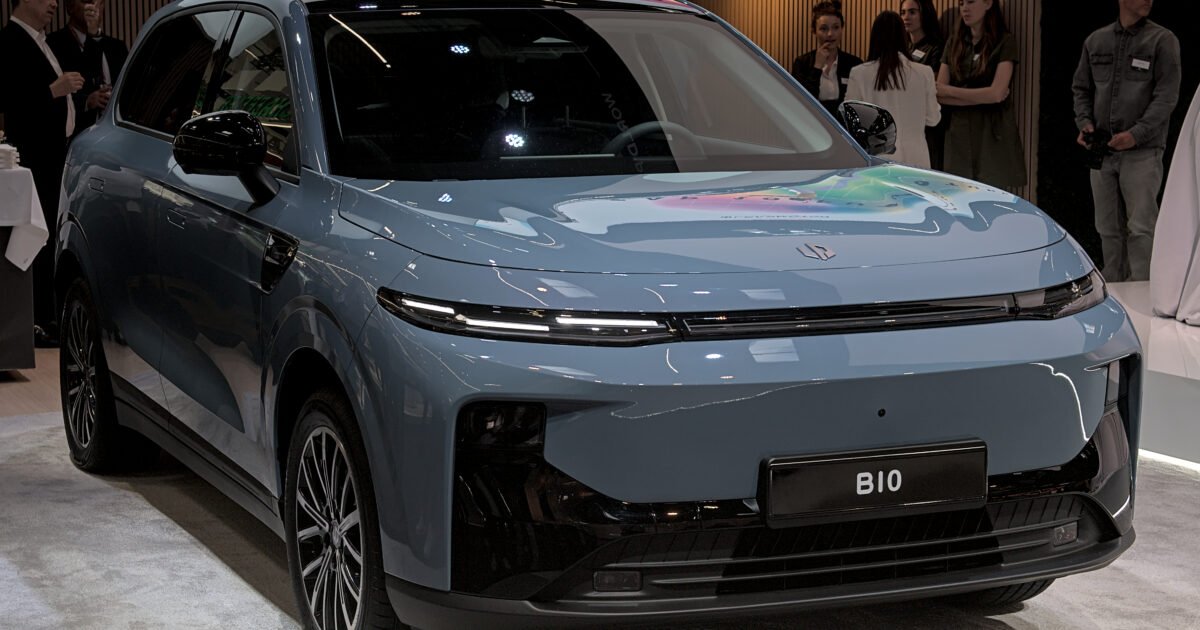
On June 23, 2026, Leapmotor International — the joint venture between Stellantis and Chinese EV maker Leapmotor — opened a battery assembly workshop in Mallén, Spain, positioning it directly beside the Stellantis-CATL battery cell plant in Aragon. This is not just a factory opening. It is the most concrete evidence yet that a Chinese EV maker is building a localized, tariff-proof European supply chain through partnership rather than confrontation. With an initial capacity of approximately 65,000 LFP battery modules (scalable to 100,000), the facility will supply modules for the Leapmotor B10 electric SUV, which begins assembly in nearby Figueruelas from late 2026. For European policymakers weighing how to respond to Chinese EV imports, Leapmotor’s Spain investment offers a template that neither punitive tariffs nor outright bans can replicate: local jobs, local supply chains, and technology transfer, all structured through a European-majority joint venture.
What China Brings to the Table
The Mallén workshop is the operational result of a partnership architecture that is unique in the global auto industry. Stellantis owns approximately 21% of Leapmotor and controls Leapmotor International, the 51:49 joint venture responsible for manufacturing and selling Leapmotor vehicles outside China. This structure gives Stellantis — a European company — operational control, while Leapmotor contributes its EV platform technology, battery expertise, and manufacturing know-how.
The facility will begin by assembling lithium iron phosphate (LFP) batteries — the cost-effective, cobalt-free chemistry that has become the dominant technology for mainstream EVs. The choice of LFP is strategic: it avoids the supply-chain vulnerabilities associated with cobalt and nickel while delivering competitive energy density and superior safety characteristics. The workshop is designed to handle multiple battery chemistries, future-proofing the investment as battery technology evolves.
Workforce integration is a deliberate part of the strategy. Spanish and Chinese staff will work side by side at the plant, with Spanish workers recently trained at a battery facility in China. This knowledge transfer is critical — it ensures that the European workforce gains hands-on experience with EV battery assembly at scale, building the skilled labor pool that Europe’s broader EV transition requires.
The scale is modest by Chinese standards — 65,000 modules per year maximum versus the gigawatt-hour-scale facilities CATL operates in China — but the location is what matters. Mallén sits in the emerging Aragon EV cluster, which already includes the Stellantis-CATL gigafactory (scheduled to begin cell production by end of 2026), the Figueruelas vehicle assembly plant, and chassis production in Borja. Leapmotor’s workshop completes a localized supply chain that spans battery cells, modules, and vehicle assembly — all within a 50-kilometer radius.
International Context
Leapmotor’s Spanish investment represents the most advanced example of what analysts are calling the “Stellantis model” for Chinese automaker internationalization: use a European partner for market access, regulatory navigation, and political cover, while contributing technology, cost-competitive platforms, and manufacturing expertise. This model contrasts sharply with BYD’s direct-investment approach (Hungary plant, Turkey project on hold) and SAIC’s brand-acquisition strategy (MG).
The political timing is significant. The EU’s Industrial Acceleration Act and “Made in EU” rules increasingly favor localized production over imports. BYD recently suspended its $1 billion Turkey factory plan and is actively searching for an existing Southern European factory to acquire — a pivot that validates Leapmotor’s strategy of locating production inside the EU from the start. CATL’s cell production at the same Aragon site, also beginning by end of 2026, ensures that Leapmotor’s modules will use locally produced cells, strengthening the “Made in EU” credentials of the finished vehicles.
The B10 SUV — the first model to use Mallén-assembled battery modules — is positioned as a volume product targeting the competitive European C-SUV segment. It follows Leapmotor’s existing European models (C10, T03), which are already sold through Stellantis dealerships. The company plans additional models (B05, A10, A05) from 2027, suggesting a full product portfolio strategy rather than a single-model experiment.
Leapmotor’s approach also addresses what has become the hardest problem for Chinese EV exporters: after-sales service and brand trust. Stellantis dealerships provide an instant, continent-wide sales and service network that no Chinese brand could build independently in less than 5-7 years. For European consumers skeptical of unfamiliar Chinese brands, the Stellantis association provides warranty, service, and resale-value reassurance that direct-to-consumer or new-dealer-network strategies cannot match.
Buyer Impact
For European EV buyers, Leapmotor’s localized production changes the value proposition in several ways. First, vehicles assembled in Spain with locally produced battery modules will qualify for EU-made incentives and avoid the tariff uncertainty that affects imported Chinese EVs — potentially translating to lower purchase prices. Second, Stellantis’s dealership and service network means Leapmotor owners get the same after-sales experience as Peugeot, Citroën, or Fiat owners — eliminating the “where do I get it serviced?” concern that has held back Chinese EV adoption in Europe. Third, the Aragon cluster creates secondary-market benefits: as production scales and the local supply chain matures, parts availability and repair costs should improve, strengthening residual values.
For the broader European market, Leapmotor’s investment signals that localization is economically viable for Chinese automakers. If the Stellantis-Leapmotor model succeeds, it could accelerate similar partnerships — potentially with Volkswagen, Renault, or other European OEMs — creating a network of joint-venture EV production across the continent. This would transform the European EV market from a battleground of imports versus protectionism into a more integrated ecosystem where Chinese technology and European manufacturing coexist.
The facility’s modest initial capacity (65,000 modules, enough for roughly 65,000 vehicles) suggests Leapmotor is taking a measured approach — proving the model before scaling aggressively. But the location, the partners (Stellantis and CATL), and the political alignment (EU-localized production) make this one of the most strategically significant Chinese EV investments in Europe to date. If it succeeds, it could become the template for how Chinese automakers build their European businesses without triggering the protectionist backlash that has defined the past three years.
Sources
- Reuters — Leapmotor opens battery assembly workshop near Stellantis-CATL plant in Spain
- Global Banking & Finance Review — Leapmotor opens battery assembly workshop near Stellantis-CATL plant in Spain
- CnEVPost — Stellantis begins Leapmotor vehicle assembly in Malaysia after Europe push
- Stellantis Media — Leapmotor Press Releases