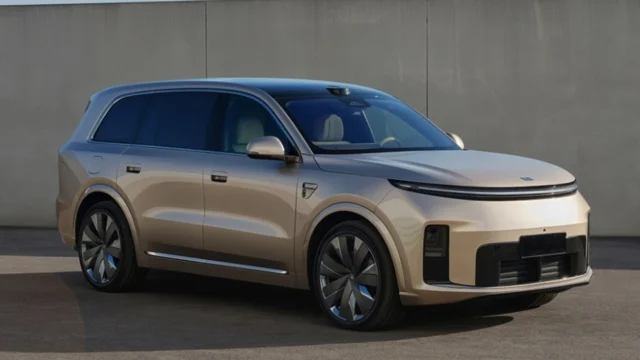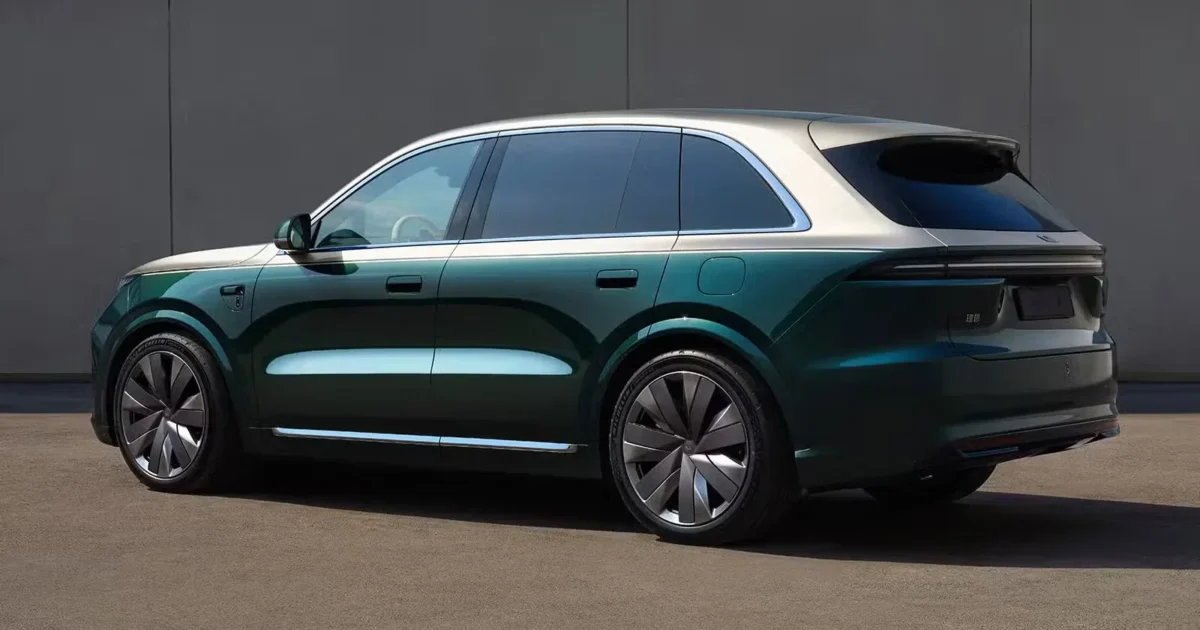
Li Auto will launch the all-new L8 Livis — a flagship five-seat EREV SUV — in late June 2026, fundamentally reshuffling the brand’s product lineup to eliminate internal overlap with the L9. The redesigned L8 grows larger, adopts a five-seat layout, and gains a 343 km WLTC pure-electric range with 5C fast charging and the company’s self-developed M100 autonomous driving chip. The move comes as the outgoing L8 saw April deliveries plunge 72% year-over-year as buyers waited for the new model.
Background
Li Auto built its brand on extended-range electric vehicles (EREVs) with six-seat family configurations. The L8, launched in 2022, served as the mid-range six-seat option between the compact L7 and the flagship L9. But as Li Auto expanded its lineup, the L8’s position became increasingly awkward — too similar to the L9 in configuration and not differentiated enough in price to justify its existence.
CEO Li Xiang’s solution is radical: transform the L8 from a six-seat family hauler into a five-seat flagship. The new L8 Livis is “essentially the five-seat version of the new L9,” Li Xiang told investors during the Q1 earnings call, per CnEVPost. This positions it not as a budget alternative to the L9 but as a distinct offering for buyers who prioritize space and luxury over third-row seating.
Key Numbers and Details
| Specification | L8 Livis (New) | L8 (Current) |
|---|---|---|
| Seating | 5 seats | 6 seats |
| Length | 5,135 mm | 5,080 mm |
| Width | 2,000 mm | 1,995 mm |
| Height | 1,800 mm | 1,800 mm |
| Wheelbase | 3,045 mm | 3,005 mm |
| Battery | 72.7 kWh ternary Li | Smaller |
| WLTC EV range | 343 km | Lower |
| Fast charging | 5C | Not specified |
| EREV engine | 115 kW self-developed | Previous gen |
| LiDAR | 3 (roof + side + rear) | 1 (roof only) |
| Drive chip | M100 (self-developed) | Not equipped |
The dimensions tell the story: the L8 Livis is 55 mm longer and 40 mm wider than the outgoing model, with a 40 mm longer wheelbase — all dedicated to maximizing second-row space in the five-seat layout. The 72.7 kWh battery matches the new L9’s specification, as does the 343 km WLTC pure-electric range. The three-LiDAR sensor array and M100 chip also mirror the L9 Livis, which starts at 509,800 RMB (about $70,800).
Current L8 pricing ranges from 321,800 to 379,800 RMB (about $44,700–$52,700). The Livis version’s pricing has not been announced but is expected to be positioned below the L9 Livis.
Industry Impact
The L8’s transformation reflects a broader shift in China’s premium SUV market. Six-seat configurations were once the defining feature of the EREV segment, but as Li Auto’s own data shows, demand is increasingly bifurcating between true three-row family vehicles and spacious five-seat flagships. The L9 owns the six-seat space; the L8 Livis will target the five-seat premium segment where the BMW X5 and Mercedes GLE compete.
The outgoing L8’s 72% year-over-year sales decline in April — just 1,457 units — illustrates the cost of product stagnation in China’s hypercompetitive NEV market. Buyers held off as they awaited the Livis refresh, a phenomenon Li Auto has experienced before with previous model transitions. The question is whether the five-seat pivot will cannibalize L9 sales or expand the addressable market, as Li Auto prepares its Livis Day AI showcase on June 15.
The M100 chip is another strategic signal. If successful, it reduces Li Auto’s dependence on NVIDIA’s Orin platform and gives the company full control over its autonomous driving software-hardware stack — a path that Tesla pioneered and that BYD, XPeng, and NIO are all pursuing with their own custom silicon.
What’s Next
The L8 Livis will launch and begin deliveries in late June 2026. Li Auto’s Livis Day on June 15 may provide additional details on pricing and specifications. If the L8 Livis hits its marks — 343 km EV range, M100 self-drive chip, three LiDAR sensors at a price below the L9 — it could quickly become the volume driver in Li Auto’s refreshed lineup, reversing the current L8’s downward sales trajectory and giving the brand a credible competitor in the five-seat premium SUV segment.