From Lab to Factory Floor
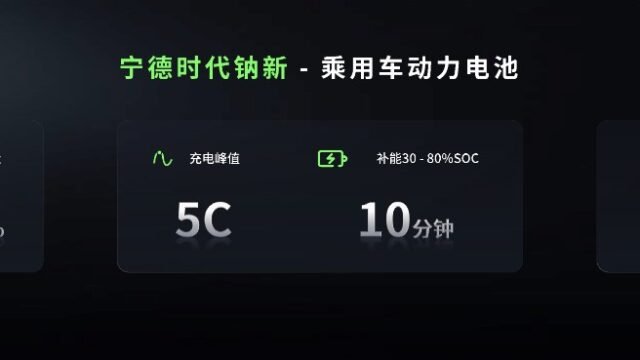
CATL (Contemporary Amperex Technology Co., Limited) has confirmed that its first-generation sodium-ion battery cell has entered mass production, with commercial deployment in electric vehicles expected to begin in the second half of 2026. The announcement marks a critical milestone in the battery industry’s long-running effort to commercialize sodium-based chemistry as a lower-cost alternative to conventional lithium-ion cells.
The mass-produced cells target an energy density of 160 watt-hours per kilogram (Wh/kg), a figure that places sodium-ion batteries squarely in the territory previously dominated by lithium iron phosphate (LFP) chemistry. CATL’s sodium-ion cells are designed for use in entry-level and mid-range passenger cars, as well as two-wheelers and stationary energy storage systems, where cost per kilowatt-hour matters more than absolute range.
Why Sodium-Ion Matters for Global EV Adoption
Sodium is one of the most abundant elements on Earth — roughly 1,000 times more common in the Earth’s crust than lithium. This abundance translates directly into supply chain resilience: sodium-ion batteries do not require lithium, cobalt, or nickel, three materials whose prices have historically swung wildly on global commodity markets. For automakers targeting price-sensitive segments, the cost advantage could be transformative.
CATL’s sodium-ion cells reportedly offer cost savings of 20% to 30% compared to equivalent LFP packs, according to industry analysts. The company has also developed an AB battery pack architecture that integrates both sodium-ion and lithium-ion cells in the same module, allowing vehicles to leverage the low-temperature performance of sodium-ion (which retains over 90% capacity at -20°C) alongside the higher energy density of lithium cells in a single optimized system.
Industry Ripple Effects
CATL’s move is already triggering competitive responses across the battery sector. BYD’s FinDreams battery unit and China’s CALB are both reported to be accelerating their own sodium-ion programs, while European and North American battery startups are watching the development closely. For automakers like Volkswagen, Stellantis, and Toyota — all of whom have partnerships with CATL — sodium-ion could unlock new price points for volume models.
The mass production milestone also positions CATL to dominate the next wave of battery chemistry, just as the company did with LFP cells in the early 2020s. With an annual production capacity that already dwarfs every global competitor, CATL’s ability to scale sodium-ion manufacturing gives it a first-mover advantage that could shape the mid-market EV segment for the rest of the decade.
What This Means for EV Buyers
For global EV buyers, sodium-ion batteries address two persistent barriers: upfront cost and supply chain anxiety. A 20-30% reduction in battery pack cost could bring entry-level EVs closer to price parity with combustion vehicles in markets like India, Brazil, and Southeast Asia where affordability is the primary adoption barrier. Unlike lithium, sodium faces no geopolitical concentration risk — it can be sourced from seawater and is produced in dozens of countries. In cold climates, sodium-ion’s superior low-temperature performance (90%+ capacity at -20°C) could eliminate the winter range penalty that has historically limited EV adoption in northern Europe, Canada, and the northern United States.
Frequently Asked Questions
How do sodium-ion batteries compare to LFP batteries?
CATL’s first-gen sodium-ion cells target 160 Wh/kg, comparable to mid-range LFP batteries. They offer 20-30% lower cost, superior cold-weather performance (90%+ capacity at -20°C), and eliminate reliance on lithium, cobalt, and nickel. However, LFP still holds an edge in cycle life and is more proven at scale. CATL’s AB pack design lets automakers use both chemistries in the same vehicle.
When will sodium-ion EVs be available?
CATL expects commercial deployment in electric vehicles to begin in the second half of 2026, starting with entry-level and mid-range passenger cars in China. Global availability will depend on individual automaker timelines and regional homologation requirements.
Are sodium-ion batteries safer than lithium-ion?
Sodium-ion batteries share LFP’s inherent safety advantages — they are thermally stable and resist thermal runaway better than NMC lithium cells. Combined with their cold-weather performance, they are particularly well-suited for harsh climate applications where both safety and temperature resilience matter.
Who is competing with CATL in sodium-ion?
BYD’s FinDreams battery unit, China’s CALB, and several European and North American startups are developing sodium-ion programs. However, CATL’s manufacturing scale gives it a significant first-mover advantage — the company’s existing production infrastructure can be adapted for sodium-ion faster than competitors can build from scratch.
Related Coverage
- Best EV Battery Technology 2026: BYD Blade vs CATL Qilin vs Tesla 4680 — Comprehensive comparison of leading battery technologies
- CATL Chairman Says Solid-State Batteries Years From Mass Market — Why sodium-ion may arrive before solid-state for mass adoption