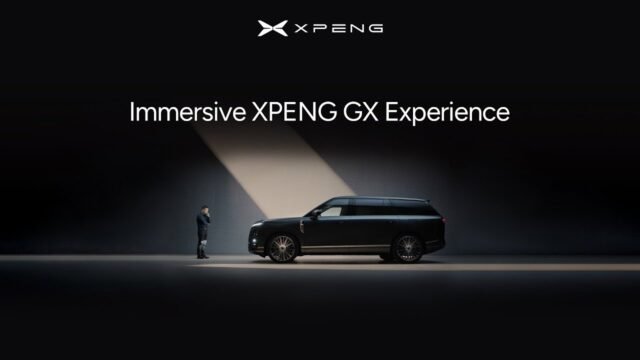
XPeng delivered 32,158 vehicles in May 2026, a 3.7% month-on-month increase but still 4.08% below the same period last year — the company’s fifth consecutive month of year-on-year decline. The bright spot: the all-new GX flagship SUV began customer deliveries on May 26, with XPeng management projecting that the model will drive a significant volume recovery starting in June.
Per XPeng’s official delivery announcement and CnEVPost data, the company needs to deliver approximately 40,000 vehicles in June to meet its Q2 2026 guidance range of 105,000-115,000 units. May’s 32,158 figure puts Q2-to-date at roughly 67,000, meaning June must deliver a sharp acceleration — a tall order that depends almost entirely on a successful GX ramp-up.
The GX Bet: XPeng’s Most Important Launch Since the P7
The GX represents XPeng’s entry into the premium large SUV segment, a category dominated by the Li Auto L9 and AITO M9. Built on XPeng’s next-generation SEPA 2.0 platform, the GX features an 800V architecture, XPeng’s latest XNGP urban autonomous driving system, and a claimed CLTC range of up to 702 km for the dual-motor variant.
Pricing starts at ¥329,900 (about $45,800) for the base rear-wheel-drive version, rising to ¥399,900 ($55,500) for the dual-motor performance trim. This positions the GX between the Li Auto L8 and L9 in price, with what XPeng argues is a substantial technology advantage — particularly in autonomous driving and fast-charging capability.
XNGP: XPeng’s Differentiator
XPeng’s XNGP (Xpeng Navigation Guided Pilot) remains the company’s strongest technology card. Unlike Tesla’s FSD in China, which is limited by regulatory constraints, XNGP operates with full regulatory approval for urban autonomous driving across more than 250 Chinese cities. The GX ships with the latest XNGP hardware suite, including dual LiDAR sensors and XPeng’s in-house developed XNet perception architecture.
XPeng has also begun monetizing XNGP through a subscription model (¥1,999/month or roughly $278), creating a recurring revenue stream that could improve margins as the installed base grows. The subscription approach mirrors Tesla’s FSD pricing strategy but with the advantage of actually delivering the promised functionality.
What’s Next
XPeng’s near-term fate hinges on the GX ramp. The company needs the new flagship to add at least 8,000-10,000 monthly units to reach its Q2 guidance, meaning production and supply chain execution will be critical. Longer-term, XPeng’s announced partnership with Volkswagen — under which VW will use XPeng’s SEPA platform and XNGP technology for China-market EVs starting in 2026-2027 — provides a technology licensing revenue stream that could help offset the cost of its aggressive R&D spending.
Sources
- CnEVPost, May 2026 deliveries wrap-up
- Stock Titan, XPeng announces vehicle delivery results for May 2026
- Coin Alert News, Chinese EV Makers NIO, XPeng, and Li Auto Report May Deliveries
- Caijing Magazine, May NEV sales ranking report