BYD’s overseas deliveries surged to an all-time high of 160,600 units in May 2026, an 80.4% year-on-year increase that helped the company post total monthly sales of 383,453 vehicles despite a 24% decline in its domestic Chinese market. Per BYD’s official May production and sales report filed with the Shenzhen Stock Exchange, overseas markets now account for 41.9% of the company’s total volume — up from just 23% a year earlier.
The record underscores BYD’s accelerating pivot toward international markets as the Chinese domestic NEV market faces intensifying price competition and slowing growth. BYD’s cumulative NEV sales have now exceeded 16.5 million units, and the company has held the top position in China’s NEV market for 60 consecutive months, according to Sina Finance.
Geographic Breakdown: Europe and ASEAN Lead
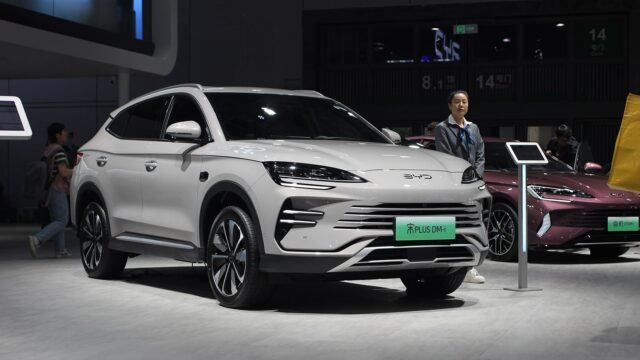
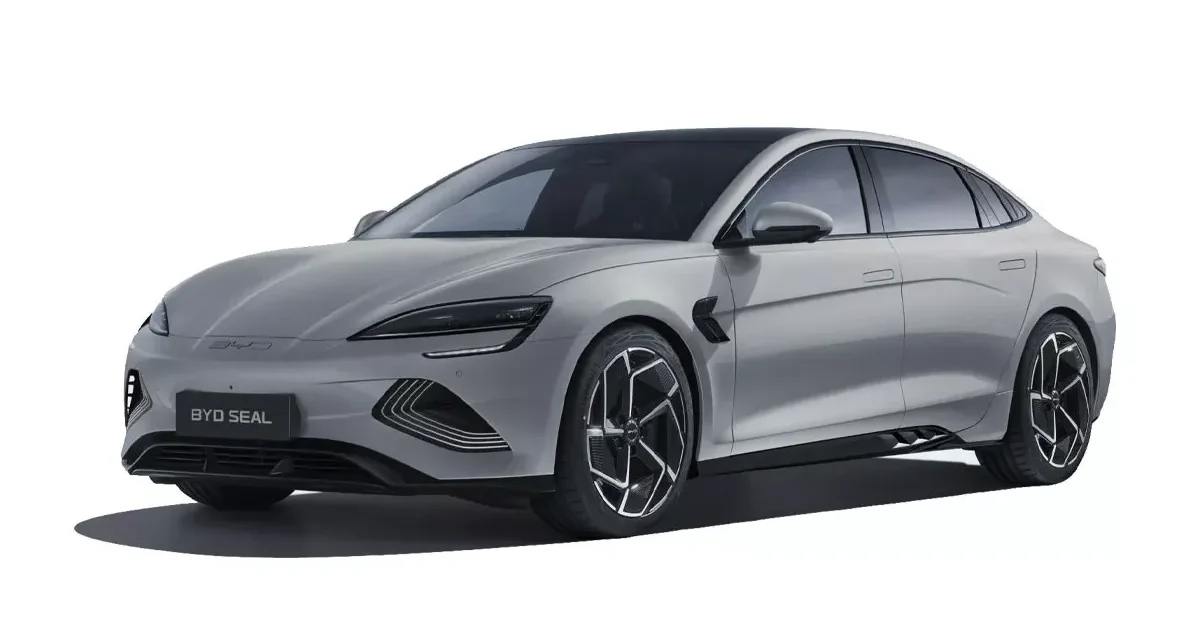
Europe and Southeast Asia remain BYD’s two largest export regions. In Europe, BYD now operates in 29 countries with a network approaching 2,000 dealership outlets, per Automotive News Europe. The company’s European lineup — headlined by the BYD DaTang, Seal, Dolphin, and Atto 3 — has gained traction particularly in the UK, Germany, and Nordic markets where EV adoption rates are high and consumers are increasingly receptive to Chinese-brand vehicles at competitive price points.
In Southeast Asia, BYD’s Thailand factory — the company’s first wholly-owned overseas production facility — reached full capacity in Q1 2026, producing right-hand-drive vehicles for the Thai, Indonesian, Malaysian, and Australian markets. BYD is also in advanced discussions for manufacturing facilities in Mexico, Turkey, and potentially Canada, per Automotive News reporting from January 2026.
Offsetting Domestic Headwinds
The overseas surge has become crucial for BYD’s financial health. While total May sales of 383,453 units represented only a 0.26% year-on-year increase — essentially flat — the composition shift toward higher-margin export markets improves BYD’s average selling price and profitability. Vehicles sold in Europe typically carry a 30-50% price premium over their Chinese domestic equivalents.
BYD’s domestic volume of approximately 223,000 units in May reflects the ongoing pain of China’s EV price war. The company’s domestic sales have declined year-on-year for several consecutive months, despite aggressive pricing on models like the Qin Plus and the introduction of next-generation Blade Battery technology and megawatt flash charging across its lineup.
Tariff and Policy Landscape
The record export figures come despite the European Union’s additional tariffs on Chinese-made EVs, which took effect in late 2024. BYD faces a combined duty rate of approximately 27% (10% base plus 17% countervailing duty), higher than some competitors but still manageable given the company’s vertical integration cost advantages. The EU and China have also been negotiating a potential minimum-price mechanism to replace tariffs, according to EV Magazine, though no agreement has been finalized.
In North America, BYD faces a 100% tariff on Chinese-made EVs in the United States — effectively blocking market entry — but is exploring Canada and Mexico as potential manufacturing bases that could provide indirect access to the North American market under USMCA rules.
What’s Next
BYD’s management has targeted 1.3 million overseas deliveries for full-year 2026 (per Tech in Asia), which would require maintaining roughly 108,000 monthly exports through December. The May figure of 160,600 suggests the company is running well ahead of that target, though Q3 and Q4 typically see seasonal moderation. The EU’s potential shift from tariffs to minimum pricing — if finalized — could provide an additional boost to BYD’s European competitiveness.
Sources
- Sina Finance, BYD May sales surpass 383K, 60-month streak as NEV champion
- CnEVPost, May 2026 deliveries wrap-up
- Automotive News, BYD mulls new plant in Europe, Canada foray in 2026 overseas shift
- Tech in Asia, BYD targets 1.3 million overseas EV deliveries in 2026