CATL Advances Sodium-Ion Battery Mass Production to 2026
CATL Chief Scientist Wu Kai announced at the 2026 Equipment Powerhouse Forum that a range of sodium-ion battery products will enter mass production in 2026, accelerating a timeline previously set for Q4 and signaling a potential inflection point for the technology.
Background: Five Years of Sodium-Ion Development
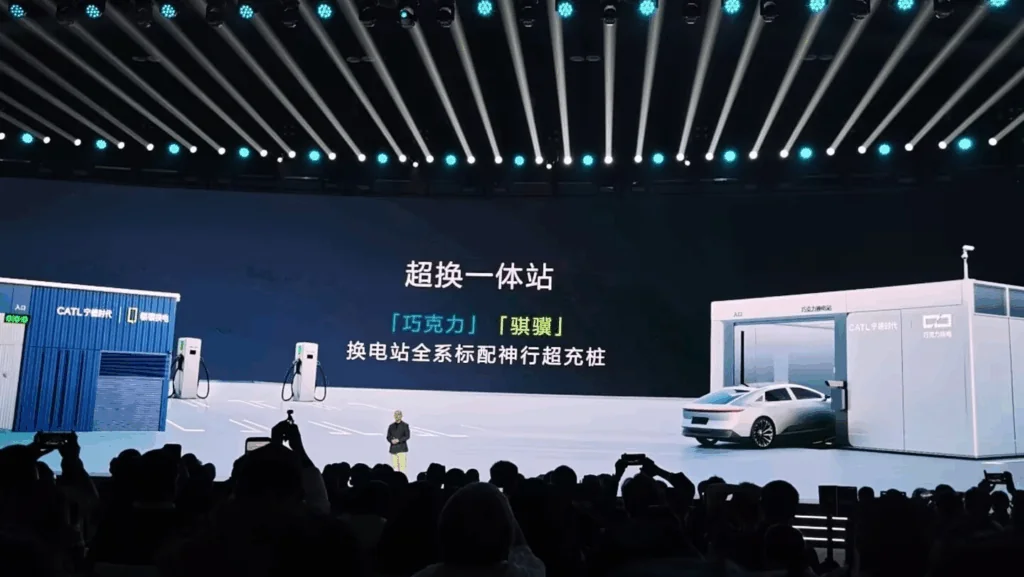
CATL first unveiled its sodium-ion battery in 2021, positioning it as a lower-cost, cold-weather-capable alternative to lithium iron phosphate (LFP) cells. Over five years, the company resolved core challenges — hard-carbon anode stability, moisture control in manufacturing, and gas generation during cycling — that had kept sodium-ion technology in the lab. At its April 2026 Super Tech Day, CATL launched the third-generation Shenxing ultra-fast-charging battery, third-generation Qilin battery, and the “Naxin” sodium-ion battery, initially targeting Q4 2026 for mass production.
China’s sodium-ion patent landscape has exploded alongside CATL’s development: 12,500 existing patents, with 3,082 applications filed in 2024 alone and over 300 already in 2026 as of early June, per the National Intellectual Property Administration.
Key Technical and Commercial Details
At the 2026 Equipment Powerhouse Forum on May 30, Wu Kai — an academician of the Chinese Academy of Engineering — stated that “a series of sodium-ion battery products will achieve scaled mass production this year.” This language is notably more aggressive than the Q4 2026 timeline given just five weeks earlier at Tech Day. The Naxin cells deliver 175 Wh/kg energy density — roughly 70% of leading LFP cells — at a projected 30% lower material cost, since sodium carbonate costs roughly 1/50th of lithium carbonate.
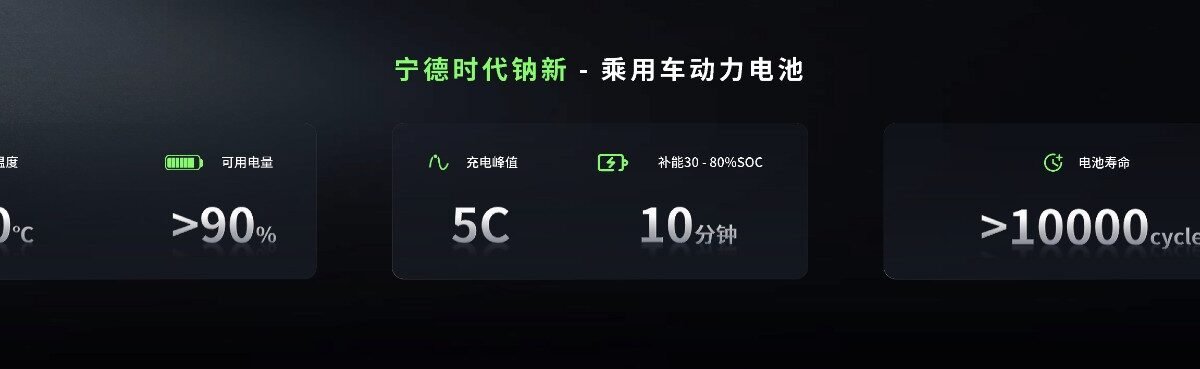
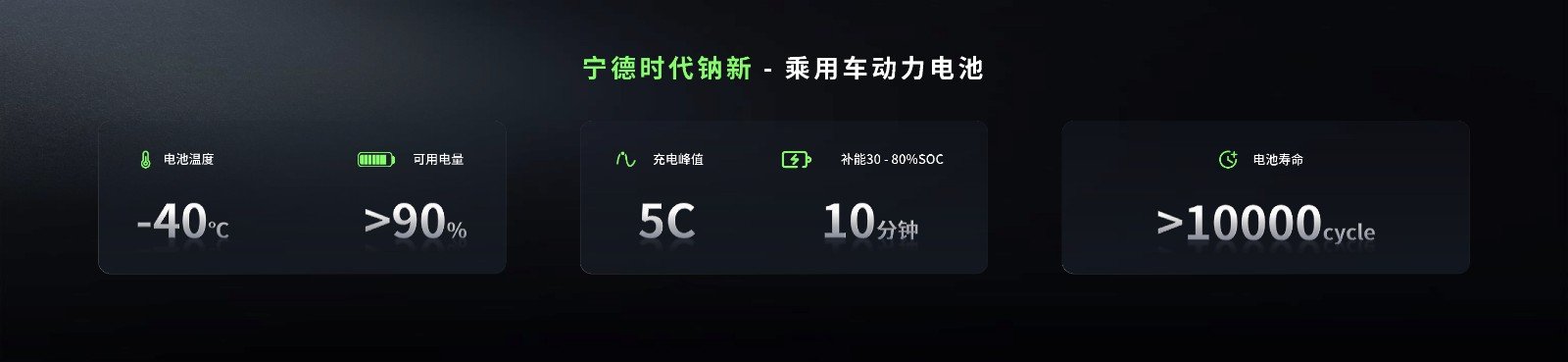
The batteries target entry-level EVs (sub-$15,000 price bracket), two-wheelers, and stationary energy storage. Their cold-weather performance — retaining over 90% capacity at -20°C — addresses a persistent weakness of LFP chemistry. Dongwu Securities projects 2026 as the “year of scaled sodium-ion application,” with industry-scale capacity potentially reaching 50 GWh by year-end.
Industry Impact
If CATL hits its mass-production target, sodium-ion batteries could unlock a new price floor for EVs. A 30% cell-cost reduction on a $12,000 entry-level car translates to roughly $1,500 in savings per vehicle — enough to bring a 300 km EV below the $10,000 mark in China. This would compress the price advantage of used ICE vehicles and accelerate the NEV penetration rate beyond its current 62.5% trajectory.
The competitive response is already forming. BYD’s FinDreams battery unit and HiNa Battery are developing their own sodium-ion cells, but neither has committed to a 2026 mass-production timeline. CATL’s lead in manufacturing scale — it operates the world’s largest battery factory — gives it a deployment advantage that smaller rivals will struggle to match. Per 界面新闻 (Jiemian), the announcement drove battery-sector ETFs up more than 2% on June 1, 2026.