A Vehicle Without a Driver
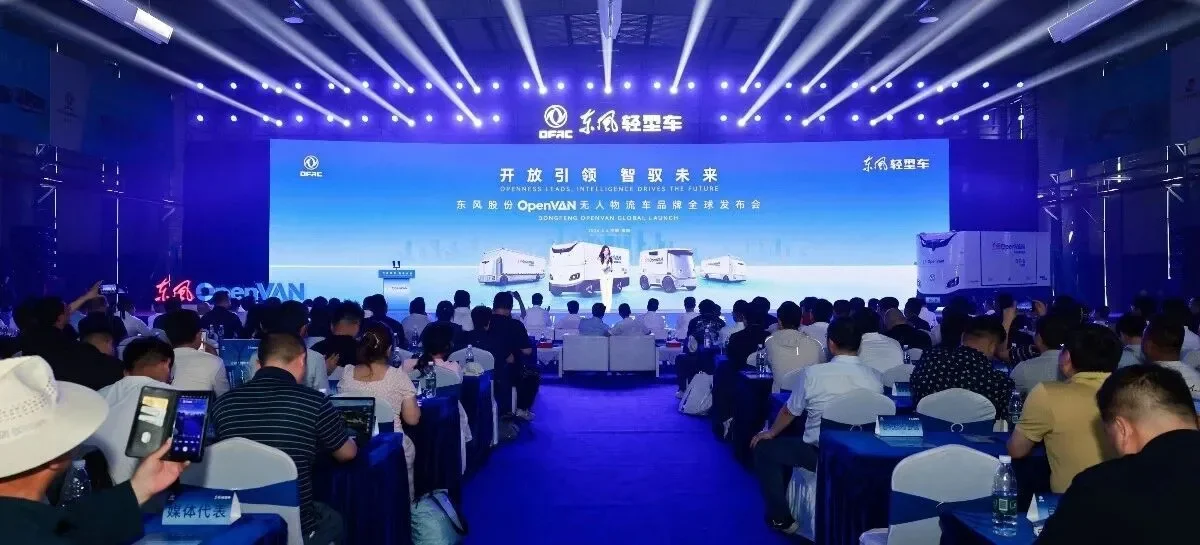
Dongfeng Motor Corporation has officially launched the OpenVAN, China’s first mass-produced fully driverless logistics vehicle designed from the ground up with no steering wheel, pedals, or driver cabin. The Level 4 autonomous vehicle is purpose-built for last-mile delivery and urban logistics, representing a significant step forward in commercial AV deployment beyond controlled pilot programs.
The OpenVAN features a modular cargo compartment that can be configured for parcel delivery, refrigerated goods transport, or mobile retail operations. With a maximum payload of 800 kilograms and a range of 200 kilometers on a single charge, the vehicle is optimized for the high-frequency, short-distance delivery routes that dominate urban logistics networks.
Global Launch Strategy
Dongfeng’s global launch strategy targets three key regions: Southeast Asia, where e-commerce growth is driving demand for automated delivery solutions; the Middle East, where planned smart city projects in Saudi Arabia and the UAE are actively seeking autonomous logistics partners; and select European markets, where Dongfeng has existing commercial vehicle distribution channels through its partnership with Stellantis.
The company has already signed memoranda of understanding with logistics operators in Thailand and Indonesia, with pilot deployments scheduled for Q3 2026. In Europe, Dongfeng is working with local homologation specialists to certify the OpenVAN for operation on public roads under the EU’s recently updated autonomous vehicle regulatory framework.
Technology and Competitive Landscape
The OpenVAN’s autonomous driving stack relies on a combination of lidar, high-definition cameras, and millimeter-wave radar, powered by a customized domain controller capable of 500 TOPS (trillion operations per second) of AI compute. The vehicle is designed to operate without remote human monitoring in geofenced areas, using high-precision maps and vehicle-to-infrastructure (V2I) communication where available.
Dongfeng enters a competitive landscape that includes Nuro in the United States, Neolix and UISEE in China, and a growing number of European startups. However, the OpenVAN’s status as a mass-produced vehicle — rather than a low-volume prototype — gives it a cost advantage, with a target price of approximately 350,000 yuan (about $48,000) per unit at scale, significantly below most comparable purpose-built AV platforms.
Source: QQ News — Dongfeng OpenVAN global launch announcement and specifications, June 2026
Source: Gasgoo — Analysis of Dongfeng autonomous vehicle strategy and international partnerships
Source: CnEVPost — China’s autonomous logistics vehicle market overview