Why It Matters Globally
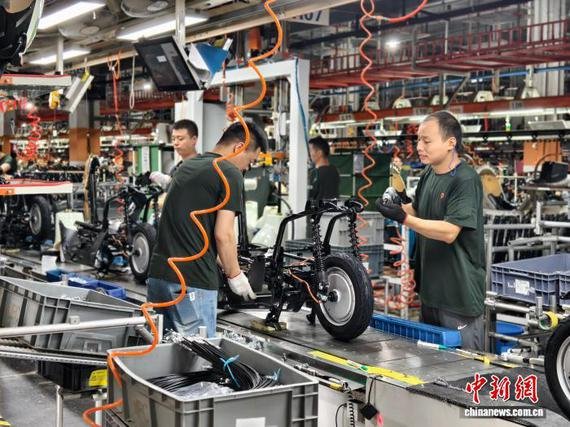
While Western headlines focus on four-wheel EVs, China’s electric two-wheelers and three-wheelers are quietly conquering global markets — from war-torn regions replacing fuel-dependent transport to European cities hungry for affordable mobility. With exports surging 46% in early 2026 and some brands seeing 70% overseas growth, this is the EV story most of the world is missing.
Export Numbers: A Breakout Year
Chinese electric two-wheelers exported 26.74 million units worth $6.83 billion in 2025, up 21% in volume and 17.6% in value year-over-year, according to China Securities Journal (Shanghai Securities News). The momentum accelerated into 2026: in the first two months, export value reached $1.36 billion, a 46.2% year-over-year increase.
Electric three-wheelers are also booming. Exports hit 98,700 units in early 2026, with annual projections exceeding 1 million units, according to Yoojia.
The Middle East Catalyst
The Financial Times reported that since the escalation of Middle East conflicts, Chinese electric two-wheeler orders and overseas sales networks have expanded rapidly. Some brands report 70% year-over-year overseas sales growth, driven by soaring fuel prices and the need for affordable, energy-independent transport in conflict-affected regions.
Q1 2026: Electric Motorcycles Take Off
Chinese electric motorcycles exported approximately 7.2 million units in Q1 2026, a 68.2% year-over-year increase, per Jiangsu Economic News. Industry observers attribute the surge to three converging factors:
- Global energy crisis: High oil prices make electric alternatives economically compelling
- Electrification megatrend: Carbon reduction consensus drives policy support worldwide
- Complete supply chain: Chinese manufacturers control the full stack from battery cells to motor controllers
Why China Dominates
Chinese electric two/three-wheeler makers benefit from vertically integrated supply chains — they source batteries, motors, controllers, and displays domestically at costs 30–50% below Western alternatives. This price advantage, combined with increasingly sophisticated designs, makes them competitive not just in developing markets but also in European cities where low-speed electric mopeds are gaining popularity.
The Ministry of Commerce’s data shows Chinese brands have captured 25% market share in Australia, ending Japanese brands’ 28-year dominance, and BYD’s Dolphin has become the best-selling EV in Brazil, where Chinese brands hold 77.6% of the pure-electric market, per China’s Ministry of Commerce.
FAQ
Are these the same as electric scooters like Vespa?
They range from e-bikes and mopeds to full-size electric motorcycles and cargo three-wheelers — a much broader category than Western electric scooters.
Why are three-wheelers popular overseas?
In Southeast Asia, Africa, and Latin America, cargo three-wheelers serve as affordable commercial vehicles for small businesses — essentially the electric version of the auto-rickshaw.
What are the trade barriers?
EU anti-dumping duties on Chinese e-bikes have been in place since 2019, but manufacturers are increasingly routing through Southeast Asian assembly to bypass tariffs.