China’s Ministry of Industry and Information Technology (MIIT) and the State Administration for Market Regulation (SAMR) jointly summoned automakers on June 11, 2026, over suspected “irrational competition” in the world’s largest auto market, marking the most direct government intervention yet in the prolonged price war that has reshaped China’s automotive landscape.
The regulatory action comes as China’s passenger vehicle retail sales fell 22.1% year-on-year to 1.51 million units in May 2026, according to data compiled by CnEVPost from CPCA figures. New energy vehicle (NEV) retail sales dropped 7.5% to 950,000 units — the fifth consecutive month of year-on-year decline.
“Regulators demanded strict compliance with the Price Law and anti-below-cost-dumping regulations, reinforced pricing compliance guidelines specific to the automotive sector, and emphasized the need to protect consumer rights,” the official statement read. Companies were explicitly ordered to maintain “quality products, fair prices, and healthy competition.”
The Price War and Its Toll
China’s auto industry has been locked in an unprecedented price war since early 2025, with manufacturers across all segments slashing prices to maintain market share. The strategy, while boosting short-term sales volumes for some brands, has eroded profitability across the industry. Analysts estimate that fewer than five Chinese NEV startups are currently profitable, with even established players reporting margin compression.
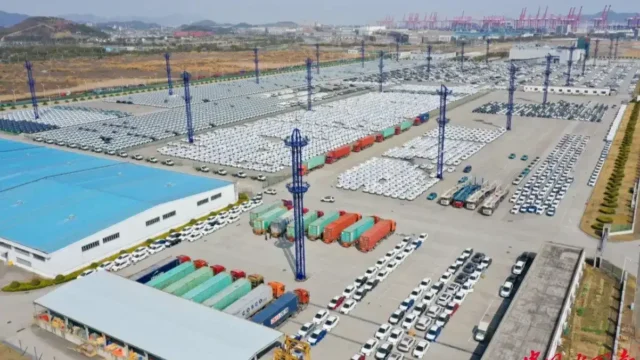
Consumer behavior has shifted markedly in response. With prices falling month after month and new models launching at an accelerating pace, car buyers have adopted a “wait-and-see” approach, according to CnEVPost analysis of CPCA data. Dealers are reducing procurement to avoid inventory buildup, creating a negative feedback loop that further depresses wholesale volumes.
Key Numbers and Details
The scale of the slowdown is striking despite NEV adoption continuing to climb. NEV retail penetration reached a record 62.9% in May 2026 and further climbed to 66.7% in the first week of June, meaning two out of every three new cars sold in China now run on electricity. Yet absolute volumes are shrinking — total vehicle sales have declined for five consecutive months on a year-on-year basis.
Meanwhile, exports have emerged as the industry’s primary growth engine. China exported 424,000 NEVs in May 2026, a 112.6% year-on-year surge that accounted for 54% of total passenger vehicle exports, according to CPCA data — the highest share ever recorded. This export boom underscores the structural shift underway: Chinese automakers are increasingly looking overseas to escape the profitability trap at home.
The regulators did not disclose which companies were summoned, and the exact scope of the meeting remains unclear. However, industry observers note that the price war has been most intense in the mass-market NEV segment, where BYD, Geely, and Changan have aggressively cut prices on volume models.
Industry Impact
The regulatory summons signals a potential turning point for China’s auto industry. If enforced, the pricing compliance guidelines could slow the pace of price cuts, giving manufacturers breathing room to invest in technology development and quality improvement rather than simply competing on cost. This would particularly benefit smaller players and startups that lack the scale to sustain prolonged margin erosion.
For global automakers, the development adds a new layer of complexity. European and American brands already struggling to compete with Chinese EVs on price may find the gap narrowing if China’s domestic price war moderates. However, any slowdown in China’s domestic market growth would likely intensify the export push, potentially accelerating Chinese brands’ expansion into Europe, Southeast Asia, and Latin America.
Why It Matters Globally
China’s auto price war has global implications far beyond its borders. The aggressive pricing strategies pioneered in China are now being exported to overseas markets, where Chinese brands are rapidly gaining share. If Chinese regulators succeed in moderating domestic competition, the industry could shift from a “race to the bottom” on price toward more sustainable competition on technology, quality, and brand — a transition that would reshape competitive dynamics worldwide.
For consumers globally, the outcome matters: continued price wars mean cheaper Chinese EVs flooding international markets, while regulatory intervention could lead to a more balanced market where innovation, not just cost-cutting, determines winners.
What’s Next
The summoned automakers are expected to adjust their pricing strategies in the coming weeks. Industry watchers will closely monitor whether major brands like BYD slow their aggressive price-cutting cadence. The CPCA’s full June sales report, due in early July, will provide the first concrete indication of whether the regulatory intervention has had any market impact.
Additionally, China’s National Development and Reform Commission (NDRC) is reportedly drafting broader industry consolidation guidelines that could reshape the competitive landscape by encouraging mergers among the country’s 100-plus NEV manufacturers.
FAQ
Which automakers were summoned by Chinese regulators?
The official statement did not disclose the names of the summoned companies. The regulators referred broadly to automakers suspected of “irrational competition,” which industry analysts interpret as brands engaged in aggressive below-cost pricing strategies.
What is causing China’s NEV sales decline despite rising penetration?
While NEV penetration is at record highs (66.7% in June’s first week), absolute sales volumes are declining because overall auto demand is weakening. Consumers are delaying purchases in anticipation of further price cuts and new model launches, creating a demand vacuum that even aggressive discounting hasn’t been able to fill.
How is the price war affecting China’s auto exports?
The domestic price war is accelerating exports as automakers seek profitable growth abroad. NEV exports surged 112.6% year-on-year in May 2026, reaching 424,000 units and accounting for 54% of all passenger vehicle exports — both record highs.
Sources
- CnEVPost, Chinese regulators summon automakers over suspected ‘irrational competition’
- CnEVPost, China’s NEV retail sales fall 14% in first week of June as penetration climbs to 66.7%
- CPCA (China Passenger Car Association), May 2026 passenger vehicle retail data