China’s LFP battery race is no longer only about cost. CATL and BYD are now using lithium iron phosphate chemistry to attack the biggest practical barriers for electric vehicles: charging time, cold-weather usability, and the perception that premium EVs need nickel-rich packs.
Key fast-charging figures are based on SMM coverage of CATL’s third-generation Shenxing battery and BYD’s Super e-Platform announcement.
CATL Turns Shenxing Into a Speed Benchmark
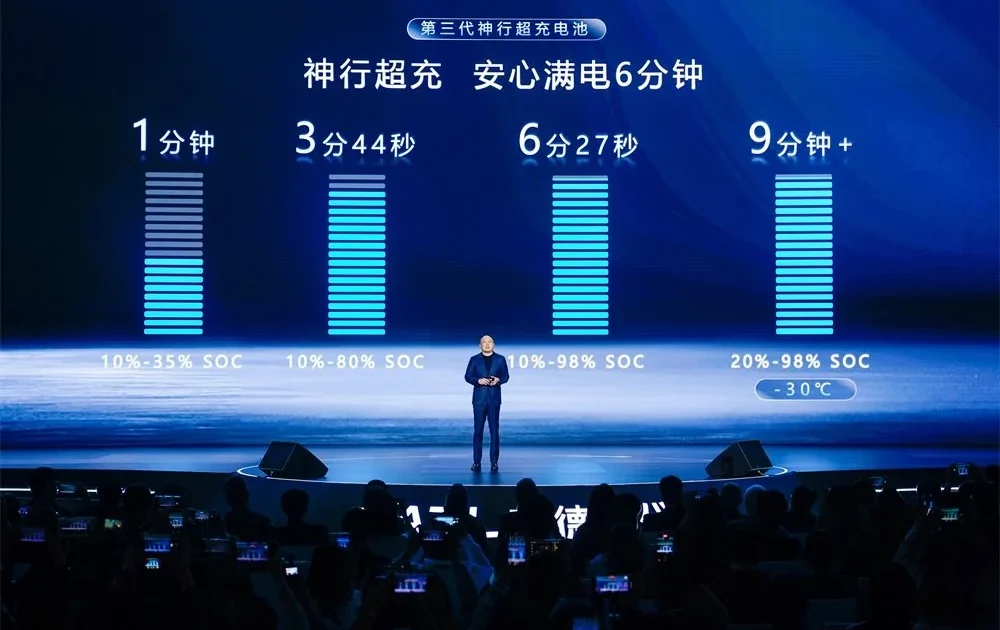
At CATL’s 2026 technology event, the company highlighted the third-generation Shenxing battery with headline charging figures that put LFP into high-performance territory. According to SMM’s report on the launch, the pack can move from 10% to 80% state of charge in 3 minutes and 44 seconds, and from 10% to 98% in 6 minutes and 27 seconds. CarNewsChina reported the same charging window, framing it as a major step for CATL’s LFP portfolio rather than a narrow concept-cell claim.
The important point for overseas readers is not a single laboratory number. It is the commercial signal: CATL is positioning LFP as a chemistry that can support faster turnaround times, wider weather coverage, and higher-end vehicle programs.
BYD Uses Platform Voltage to Make LFP Feel Premium
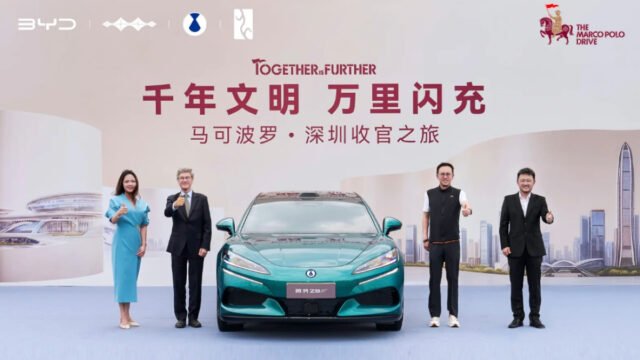
BYD is approaching the same problem from the vehicle-platform side. In its Super e-Platform announcement, BYD said the system supports 1,000 kW peak charging and can add up to 400 km of range in about five minutes under the right conditions. That is a platform story as much as a battery story: high-voltage architecture, thermal management, power electronics, and charging infrastructure all have to work together.
This is why the LFP narrative is changing. The chemistry remains cost-competitive, but the surrounding system is becoming more sophisticated. For global automakers, that combination is more disruptive than a chemistry upgrade alone.
Why LFP’s Image Is Changing
LFP still has trade-offs versus nickel-rich chemistries, especially in energy density. But the newest Chinese battery roadmaps show a different competitive axis: if an LFP pack charges quickly enough, remains stable enough, and costs less, many mainstream buyers may care less about chemistry labels. electrive’s summary of CATL’s 2026 battery line-up also shows how sodium-ion, fast-charge LFP, and range-oriented products are now being presented as a portfolio rather than a single-chemistry bet.
What This Means for Global EV Pricing
The export implication is straightforward: if Chinese suppliers can pair lower-cost LFP packs with convincing charging performance, overseas EV pricing pressure will intensify. European, U.S., and Southeast Asian brands will not only compete with cheaper Chinese vehicles; they will compete with a supply chain that is making the cheaper chemistry feel increasingly premium.