Quick Answer: China no longer pays a universal national cash subsidy for new private NEVs: central purchase subsidies ended on December 31, 2022. In 2026, eligible NEVs receive a 50% vehicle-purchase-tax reduction capped at RMB 15,000 per passenger car, qualifying trade-ins can receive up to RMB 20,000, and automakers face a 48% dual-credit requirement plus tighter efficiency and safety rules.
Last verified: July 27, 2026. This page separates rules already in force, rules formally announced for 2027, historical programs and proposals. A consultation draft or forecast is never presented as current law.
What this guide covers: China EV and NEV policy from 2009 onward: consumer incentives, purchase tax, trade-in support, vehicle-and-vessel tax, dual credits, model eligibility, safety standards, local plate policy and the shift from subsidy-led growth to standards-led regulation.
China EV policy in 2026: what actually applies
The phrase “China EV subsidy” now describes a policy stack, not one cheque. A buyer can face national purchase tax, a national trade-in program, a city registration rule and a manufacturer discount at the same time. An automaker faces a separate set of catalog, energy-consumption, safety and fleet-credit obligations. Mixing these layers is the fastest way to publish a misleading number.
| Policy | 2026 rule | Who it affects | Critical condition |
|---|---|---|---|
| Direct purchase subsidy | No universal central cash subsidy for a newly purchased private NEV. | Consumers and automakers | The national program ended after vehicles registered on December 31, 2022. |
| Vehicle purchase tax | 50% reduction; passenger-car reduction capped at RMB 15,000. | Eligible NEV buyers | Purchase date is based on the valid invoice/customs document, and the model must be in the current tax-reduction catalog. |
| Vehicle trade-in | NEV scrappage replacement: 12% of new-car price, capped at RMB 20,000. NEV replacement after transferring an old car: 8%, capped at RMB 15,000. | Qualifying individual consumers | Old vehicle, new vehicle, ownership, invoice, registration and application must satisfy the 2026 implementation rules. |
| Dual credits | NEV-credit percentage requirement of 48%. | Passenger-car manufacturers and authorized importers | This is a credit obligation, not a 48% sales quota; credits per vehicle and low-fuel-vehicle weighting matter. |
| Model eligibility | New 2026–2027 energy-consumption and PHEV/EREV technical thresholds apply. | Manufacturers and buyers seeking tax relief | A vehicle being called an “NEV” does not by itself guarantee tax treatment. |
| Safety standards | GB 36980.1-2025 applies from January 1; GB 18384-2025 and GB 38031-2025 apply from July 1. | Vehicle and battery producers | Standards govern compliance; they are not consumer rebates. |
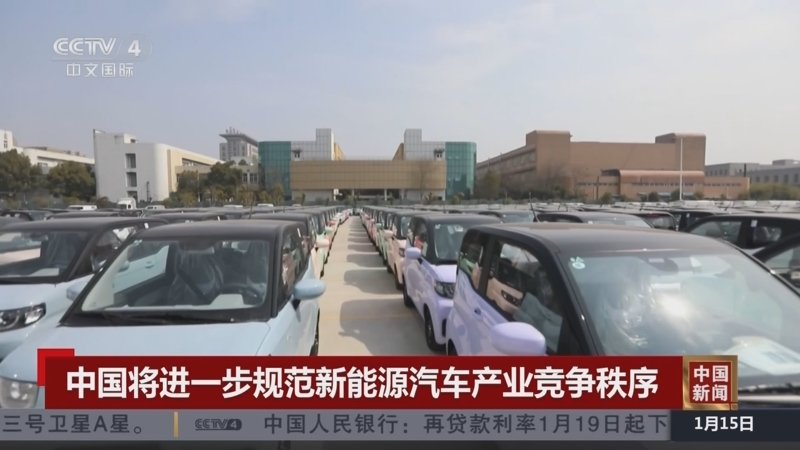
China EV policy timeline: 2009 to 2027
The durable story is a change in policy instrument. China began with demonstration fleets and high per-vehicle grants, expanded support to private buyers, tightened technical eligibility after abuse and market fragmentation, then shifted toward tax relief, fleet credits, trade-ins and mandatory standards. The government still shapes the market, but “subsidy” alone no longer explains how.
| Date | Milestone | What changed | Why it matters |
|---|---|---|---|
| 2009 | “Ten Cities, Thousand Vehicles” begins | Four ministries support public-service demonstration fleets; the first group covered 13 cities and later expanded. | Government fleets created an early market before private demand existed. |
| 2010 | Private-buyer pilot in five cities | Shanghai, Changchun, Shenzhen, Hangzhou and Hefei; BEV grant capped at RMB 60,000 and PHEV grant at RMB 50,000. | Support moved from buses and public fleets to household purchases. |
| 2013 | New promotion round | Central grants continued through approved city and regional demonstration programs with range and technology thresholds. | This was a broader controlled rollout, not an unconditional nationwide payment. |
| 2014 | Vehicle-purchase-tax exemption begins | Eligible NEVs in the official catalog receive tax relief. | Tax policy becomes a second consumer-side tool. |
| 2016 | Subsidy compliance crackdown | Authorities investigate false applications, non-compliant vehicles and related-party transactions. | Verification and technical thresholds become more important than shipment claims. |
| 2017 | Dual-credit regulation issued | CAFC and NEV credits are placed in one management system. | Policy begins shifting from fiscal grants to manufacturer fleet obligations. |
| April 2018 | Dual-credit regulation takes effect | Production and import data enter the formal accounting framework. | The regulation is active, but the first published NEV percentage obligations are for 2019–2020. |
| 2019 | Direct grant cut and first 10% credit requirement | Consumer grants fall sharply and NEV credits become a binding annual obligation. | Low-volume or inefficient compliance strategies become more expensive. |
| 2020 | 2021–2035 industry plan | Sets a 2025 goal of about 20% NEV share in new-vehicle sales and strengthens charging, safety and technology policy. | The state publishes a long-term system rather than one purchase incentive. |
| 2021–2022 | Credit ratio rises; grants taper | NEV-credit requirements rise to 14% and 16%; direct grants continue to decline. | Manufacturers must manage both fleet efficiency and electrification. |
| December 31, 2022 | Central purchase subsidy ends | Vehicles registered after the deadline receive no national direct purchase grant. | “China still gives every EV a cash subsidy” becomes false. |
| 2023 | Tax policy extended through 2027 | Full exemption for 2024–2025; 50% reduction for 2026–2027, each with a passenger-car cap. | Tax relief replaces the expired grant as the most visible national buyer incentive. |
| 2024 | National auto trade-in support expands | Scrappage and replacement policy supports fleet renewal and consumer demand. | Incentives become conditional on replacing an older vehicle. |
| 2024–2025 | Dual-credit ratios reach 28% and 38% | Per-model credit values are also tightened. | A higher percentage does not translate one-for-one into sales share. |
| 2026 | Tax halves; trade-in and standards tighten | Purchase-tax relief falls to 50%, dual credits reach 48%, new energy-use and battery-safety requirements take effect. | Support becomes more selective and quality-linked. |
| January 1, 2027 | Dual credits rise and annual tax treatment changes | NEV-credit requirement reaches 58%; PHEVs/EREVs and specified commercial NEVs lose vehicle-and-vessel-tax exemption. | A formally announced future rule—not a forecast. |
Did China end all EV subsidies after 2022?
The central purchase-grant program should be described in the past tense. The 2022 policy notice reduced most grants by 30% from 2021 and explicitly ended the program on December 31, 2022. It did not end every form of government support. Tax relief, vehicle replacement, charging investment, local registration treatment, R&D programs and manufacturer credit rules continued.
Historical accuracy note: The official 2010 private-buyer pilot capped support at RMB 50,000 for a plug-in hybrid passenger car, not RMB 30,000. The 2013 expansion also operated through approved cities and regions rather than as an unconditional nationwide payment.
How China’s 2026 NEV purchase tax works
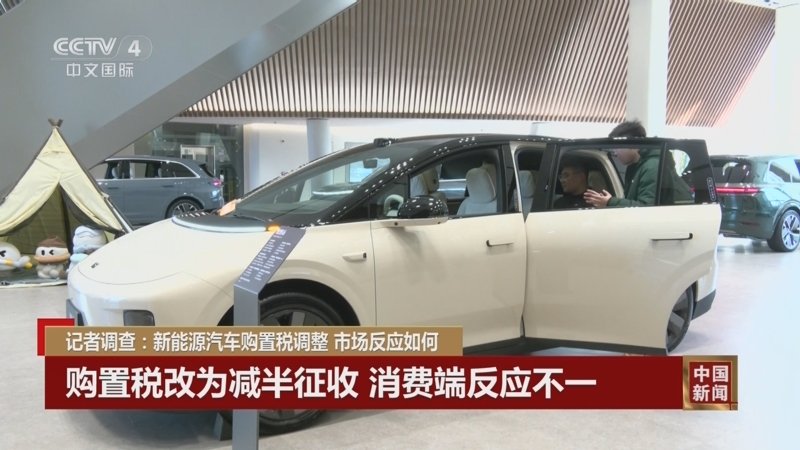
Vehicle purchase tax has a statutory 10% rate applied to the taxable price. From January 1, 2026 through December 31, 2027, an eligible NEV receives a 50% reduction, but the reduction for a new-energy passenger car cannot exceed RMB 15,000. That cap matters for higher-priced vehicles.
| Taxable price | Tax before relief (10%) | 50% calculated reduction | Allowed reduction | Tax due |
|---|---|---|---|---|
| RMB 100,000 | RMB 10,000 | RMB 5,000 | RMB 5,000 | RMB 5,000 |
| RMB 300,000 | RMB 30,000 | RMB 15,000 | RMB 15,000 | RMB 15,000 |
| RMB 500,000 | RMB 50,000 | RMB 25,000 | RMB 15,000 cap | RMB 35,000 |
The invoice date determines the purchase date for the policy. The model must appear in the applicable MIIT tax-reduction catalog and meet the 2026 technical rules. Battery-swapping vehicles can receive special taxable-price treatment when the vehicle and battery are sold and invoiced separately under the official conditions. Buyers should check the exact catalog entry and tax basis before treating a dealer’s headline as the final amount.
How does China’s 2026 vehicle trade-in subsidy work?
The 2026 program has two national routes. “Scrappage renewal” requires an eligible older vehicle to be scrapped. “Replacement renewal” requires an old passenger vehicle to be transferred rather than scrapped. A consumer cannot treat both as the same transaction, and the old vehicle, new vehicle, invoice, registration and application must meet the detailed timing and ownership rules.
| Route | New vehicle | Subsidy rate | Maximum | Key eligibility point |
|---|---|---|---|---|
| Scrap eligible old vehicle | Eligible NEV passenger car | 12% | RMB 20,000 | New NEV must be in the purchase-tax-reduction catalog. |
| Scrap eligible old vehicle | Fuel passenger car ≤2.0L | 10% | RMB 15,000 | Old vehicle must meet the fuel/registration cutoff. |
| Transfer old passenger vehicle | Eligible NEV passenger car | 8% | RMB 15,000 | Transfer and new purchase must satisfy the 2026 replacement rules. |
| Transfer old passenger vehicle | Fuel passenger car ≤2.0L | 6% | RMB 13,000 | National rule; local processing still matters. |
A buyer may be able to receive both a qualifying trade-in subsidy and purchase-tax relief because they are different instruments, but eligibility must be checked separately. Manufacturer “tax guarantee” or dealer discounts are commercial offers, not national policy.
Does China’s 48% dual-credit rule require 48% EV sales?
China’s “dual-credit” system combines Corporate Average Fuel Consumption (CAFC) credits with NEV credits. Manufacturers and authorized importers calculate annual targets from passenger-car production or import volume. NEVs generate credits based on vehicle type and technical performance; low-fuel vehicles receive favorable weighting when the required NEV-credit value is calculated. Companies with deficits must offset them through permitted credit mechanisms and compliance actions.
| Year | Requirement | Policy phase | Interpretation guardrail |
|---|---|---|---|
| 2019 | 10% | First mandatory percentage year | Vehicle credit values differ. |
| 2020 | 12% | Initial ramp | Not a 12% retail-sales quota. |
| 2021 | 14% | Post-amendment phase | CAFC and NEV accounts interact but are not the same credit. |
| 2022 | 16% | Grant-exit transition | Company-level compliance matters. |
| 2023 | 18% | Market-led growth | Credits can be adjusted by detailed rules. |
| 2024 | 28% | Tighter per-model scoring | Higher percentage partly offsets lower credits per vehicle. |
| 2025 | 38% | Current accounting cycle | Final company results are published separately. |
| 2026 | 48% | In force | Low-fuel vehicles count at 0.1 in the NEV target calculation. |
| 2027 | 58% | Formally announced | Not a prediction. |
Eligibility and safety: the new center of policy
Tax relief is now linked more closely to measurable product performance. From 2026, eligible BEV passenger cars must meet the energy-consumption limit in GB 36980.1-2025. PHEVs and EREVs must meet updated fuel-consumption and electric-energy thresholds. A model that fails the new requirements can be removed from the tax catalog and must reapply after compliance.
The safety layer also tightened on July 1, 2026. GB 18384-2025, Electric vehicles safety requirements, covers whole-vehicle and high-voltage safety. GB 38031-2025, the updated mandatory traction-battery standard, strengthens thermal-diffusion testing, adds bottom-impact testing and adds a post-fast-charge-cycle safety test. These standards do not promise that no battery will ever fail; they define test and compliance thresholds for market access.
What changes in 2027?
Two national changes are already formal. First, the NEV-credit percentage rises from 48% to 58%. Second, China removes vehicle-and-vessel-tax exemptions for PHEVs/EREVs, pure-electric commercial vehicles and fuel-cell commercial vehicles from January 1, 2027. The change applies even to affected vehicles acquired before the effective date.
Pure-electric passenger cars and fuel-cell passenger cars are different: the Ministry of Finance says they are outside the vehicle-and-vessel-tax scope and remain untaxed. See BYDToday’s 2027 PHEV vehicle-and-vessel-tax explainer for the dated implementation detail.
Local plates, charging and rural programs
Registration and use incentives are local. Beijing’s separate NEV quota, Shanghai’s dedicated NEV plate eligibility and programs in Shenzhen, Guangzhou and other cities cannot be summarized as one national “free green plate.” Rules can depend on residence, social-insurance history, whether the applicant already owns a vehicle, powertrain, purchase date and local annual quota.
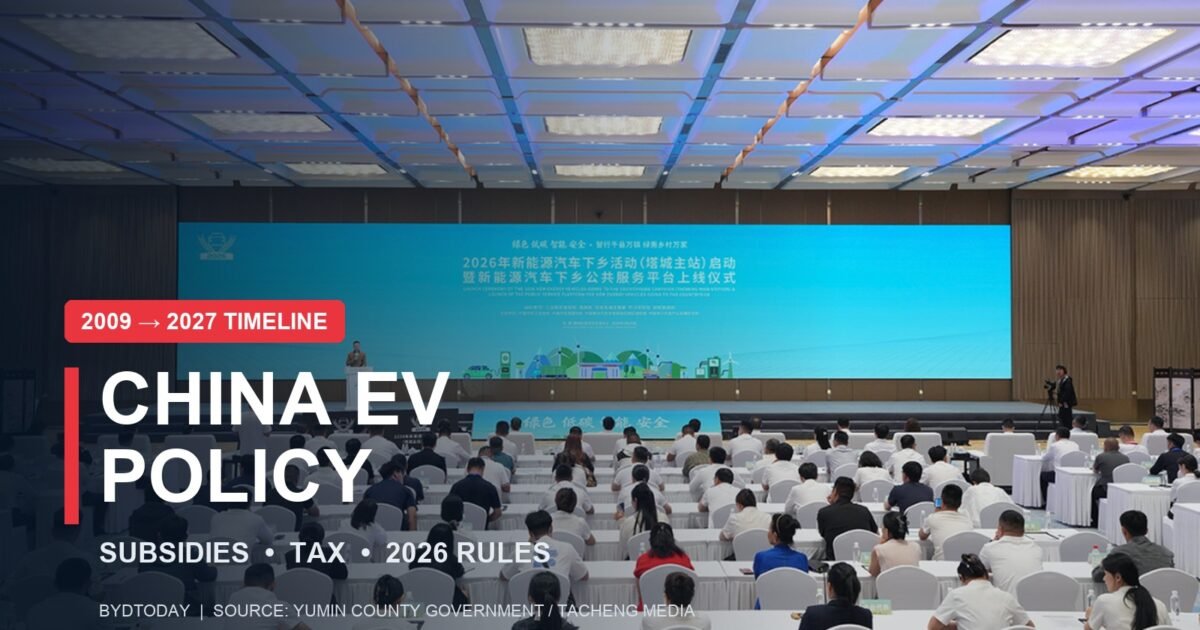
Infrastructure is another policy layer. National plans set charging-capacity and coverage goals, while provinces, grid companies and municipalities determine projects and implementation. The 2026 NEV countryside program combines vehicle displays, trade-in assistance, county charging, swapping, solar-storage-charging and vehicle-grid interaction. See BYDToday’s China EV charging infrastructure guide for connector counts and standards.
For market evidence that NEV demand can remain high after direct grants, see the dated China NEV penetration report; the policy rules themselves remain the subject of this guide.
Research the wider system: BYDToday’s China NEV Knowledge Hub connects national policy with company, battery, charging, export, technology and market explainers.
Frequently Asked Questions
Does China still subsidize electric cars in 2026?
China no longer provides a universal central cash grant for every new private NEV; that program ended on December 31, 2022. Eligible buyers can still receive purchase-tax relief, trade-in support and applicable local benefits.
How much purchase tax does a China NEV buyer pay in 2026?
An eligible NEV receives a 50% reduction from the normal vehicle-purchase-tax calculation. For an NEV passenger car, the reduction is capped at RMB 15,000. The model must be in the current official catalog.
What is China’s 2026 vehicle trade-in subsidy?
Scrapping an eligible old vehicle and buying an eligible NEV passenger car receives 12% of the new car’s tax-inclusive price, capped at RMB 20,000. Transferring an old car and buying an eligible NEV receives 8%, capped at RMB 15,000.
What is China’s dual-credit policy?
It is a manufacturer compliance system combining corporate average fuel-consumption credits and NEV credits. The 2026 NEV-credit percentage requirement is 48%, but this is not a 48% retail-sales quota because vehicle credit values and weighting differ.
Which vehicles lose the annual vehicle-and-vessel tax break in 2027?
PHEVs and EREVs, pure-electric commercial vehicles, fuel-cell commercial vehicles and energy-saving vehicles lose the stated exemption or reduction from January 1, 2027. Pure-electric and fuel-cell passenger cars remain outside the tax scope.
What changed in China’s EV safety rules in 2026?
GB 36980.1-2025 energy-consumption limits applied from January 1. From July 1, GB 18384-2025 covered whole-vehicle and high-voltage safety, while GB 38031-2025 strengthened traction-battery thermal-diffusion testing and added bottom-impact and post-fast-charge-cycle tests.
Primary and institutional sources
- National Energy Administration, 2009 “Ten Cities, Thousand Vehicles” launch and demonstration history
- Ministry of Finance, 2010 private NEV purchase-subsidy pilot
- National Development and Reform Commission, 2010 pilot scope and expansion from the initial 13 demonstration cities
- Ministry of Finance, 2022 subsidy schedule and December 31 termination
- State Council, New Energy Vehicle Industry Development Plan 2021–2035
- State Taxation Administration, 2024–2027 vehicle-purchase-tax policy
- MIIT, Ministry of Finance and State Taxation Administration, 2026–2027 technical requirements for tax-reduction eligibility
- Ministry of Commerce and seven other departments, 2026 vehicle trade-in implementation rules
- Ministry of Industry and Information Technology, dual-credit regulation, 2024–2025 requirements and 2026–2027 requirements
- Ministry of Finance, State Taxation Administration and MIIT, 2027 vehicle-and-vessel-tax adjustment and official Q&A
- National Standard Information Public Service Platform, GB 36980.1-2025 energy-consumption limit
- National Standard Information Public Service Platform, GB 18384-2025 electric-vehicle safety requirements
- State Council / Xinhua, GB 38031-2025 traction-battery safety standard
- Ministry of Industry and Information Technology and four departments, 2026 NEV countryside program