Why This Matters Globally
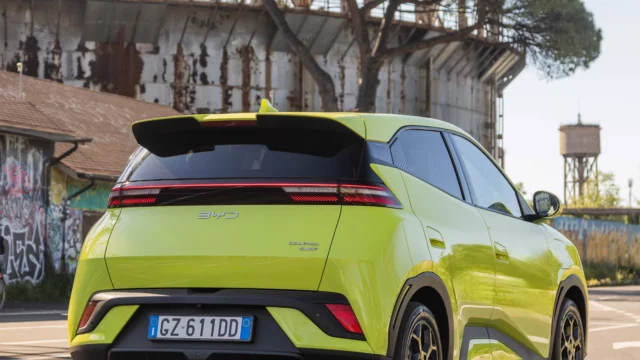
BYD is flooding the Australian market with electric vehicles at an unprecedented pace, shipping approximately 30,000 BYD and Denza vehicles across May and June 2026 — well above the brand’s usual monthly intake of roughly 4,000 to 5,000 units. The surge is powered by a confluence of forces: a global oil supply crisis triggered by the Iran conflict, Australia’s vulnerability to fuel-price shocks as a net oil importer, and BYD’s ability to deploy its own fleet of car carriers to bypass commercial shipping bottlenecks, according to FleetMate Australia.
On June 2, the BYD Zhengzhou — one of eight vessels in BYD’s self-owned car-carrier fleet — arrived in Australia carrying nearly 5,000 customer-ordered new energy vehicles, as reported by Cars24 Australia. The shipment included BYD and Denza models built to order for Australian buyers, part of a broader commitment that Zecar reported would give essential workers priority access amid record EV demand. The scale of the delivery marks a turning point: BYD is no longer treating Australia as a small export destination but as a strategic priority market.
What BYD Is Achieving in Australia
The numbers tell a remarkable story. In April 2026, BYD achieved a podium finish in the Australian new-vehicle market, ranking as the second-best-selling brand overall behind only Toyota, according to VFACTS data analyzed by TorqueCafe. The Sealion 7 electric SUV emerged as BYD’s volume leader, while the Shark plug-in hybrid pickup — unavailable in China — found enthusiastic buyers in Australia’s ute-loving market.
Australia’s overall EV market share hit a record 16.46% in April 2026, according to The Driven, with BYD leading the EV pack followed by Geely and Zeekr. This is not just a Chinese-brand story: the oil crisis has created the conditions for a structural shift in Australian car-buying behavior. When petrol prices spike unpredictably, the total-cost-of-ownership math tilts decisively in favor of EVs — and BYD, with its vertically integrated battery supply chain and self-owned shipping, is uniquely positioned to capitalize.
International Context: Oil as an EV Accelerant
Australia is proving something that has long been theorized but rarely demonstrated at scale: that fossil-fuel supply disruptions are the single most powerful catalyst for EV adoption. Unlike European markets where EV demand is heavily shaped by government subsidies and CO2 regulations, Australia has limited federal EV incentives. The shift is being driven by consumer economics — and the Iran conflict, which has roiled global shipping routes and pushed fuel prices higher, has made that economic case impossible to ignore.
BYD’s logistical advantage is equally instructive. While other automakers depend on commercial roll-on/roll-off shipping — where capacity is tight and rates have soared — BYD’s eight-vessel fleet gives it control over delivery schedules and costs, as CNBC-TV18 noted in May. The Zhengzhou is not just moving cars; it is demonstrating that a self-owned logistics chain can be a competitive weapon. For BYD’s rivals — both Chinese and Western — the message is clear: competing on product alone is no longer enough if you cannot match BYD’s shipping capacity and delivery speed.
What It Means for Global EV Buyers
For Australian consumers, the immediate takeaway is that wait times for BYD models are shrinking and model variety is expanding. The 30,000-unit May-June shipment dwarfs BYD’s full-year 2025 Australian sales of just over 50,000 units, signaling that the company is committed to meeting demand rather than managing scarcity. Essential workers — healthcare staff, teachers, emergency responders — are receiving priority delivery, a smart public-relations move that positions BYD as a community partner rather than a faceless foreign exporter.
For buyers in other oil-import-dependent markets — New Zealand, South Africa, Israel, and parts of Southeast Asia — Australia’s experience offers a preview of what may come if fuel prices remain elevated. The oil crisis is not a temporary spike; it is reshaping the global energy landscape in real time. BYD, with its dual strength in BEVs and PHEVs and its control over shipping logistics, is better equipped than any other automaker to turn that disruption into market-share gains. The Australian experiment suggests that the post-oil-crisis auto market may look very different — and much more Chinese — than the pre-crisis one.
Related Coverage
- China NEV Exports Smash Record 54% Share in May 2026 as BYD Leads 424K Shipments
- BYD Overseas Sales Hit Record 160,000 in May 2026 as International Markets Drive 42% of Total Volume
Sources
- FleetMate Australia — BYD Ship to Australia: Zhengzhou Sets Sail with 5,000 EVs
- Cars24 Australia — 5,000 BYD NEVs leave for Australia aboard BYD Zhengzhou
- The Driven — Australia EV sales surge to record 16.46% share as BYD takes lead
- TorqueCafe — BYD makes history, as almost one-third of new car deliveries are Chinese
- CNBC-TV18 — China’s BYD deploys its own car carrier fleet to bypass tariffs