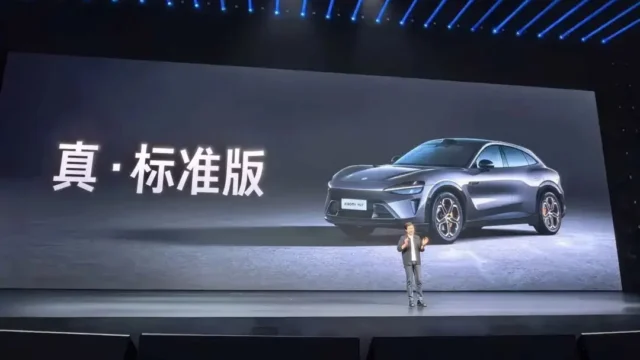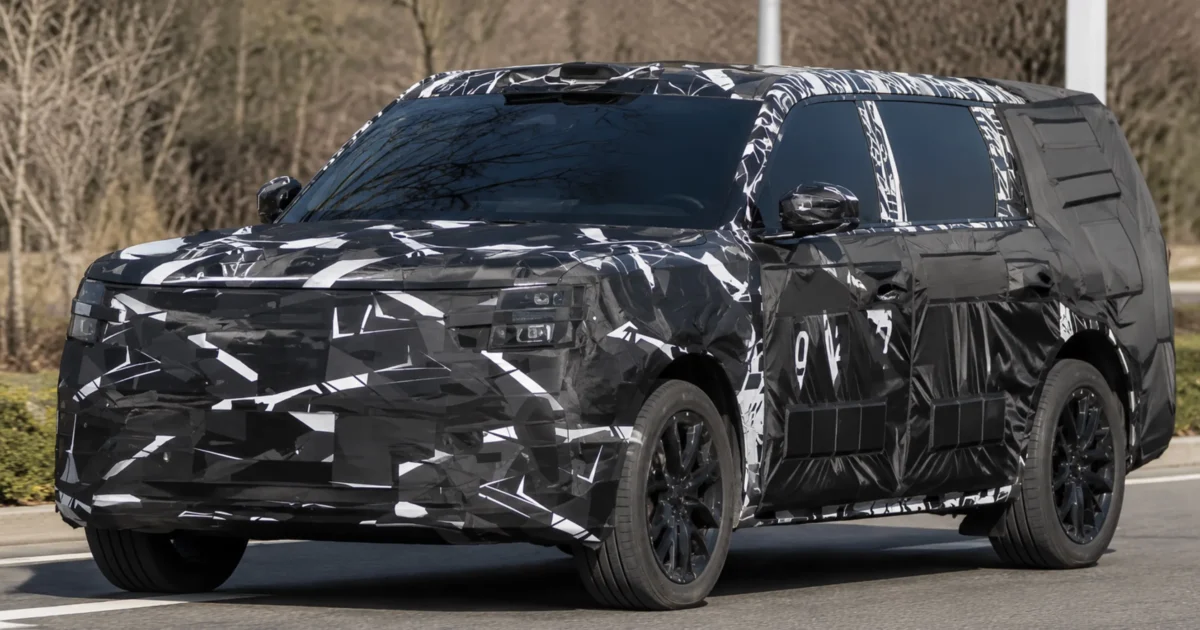
Xiaomi’s Skynomad sub-brand has received official MIIT production qualification to manufacture extended-range electric vehicles (EREVs), with the company simultaneously filing the Kunlun N3 — a full-size SUV exceeding 5.3 meters — for type approval. This article provides a technical deep-dive into the MIIT filing specifications, battery supplier split, and competitive positioning against the Li Auto L9 and AITO M9.
Quick Answer: The Xiaomi Skynomad Kunlun N3 is a 5.3-meter+ EREV SUV with a 70+ kWh battery (Sunwoda 60% / CALB 40%), targeting 400-500 km of CLTC pure-electric range. MIIT production qualification was filed June 11, 2026, with H2 2026 launch expected. For the original news announcement, see: Xiaomi Gets Green Light to Build EREVs Under Skynomad Brand, Kunlun N3 SUV Coming.
What the MIIT Filing Reveals: Full Specifications
The MIIT filing, published June 11 with a public comment period closing June 17, contains several details not disclosed at Skynomad’s initial announcement:
- Body dimensions: Length exceeds 5,300 mm (exact figure pending final filing confirmation); width ~1,990 mm; height ~1,760 mm; wheelbase ~3,050 mm — positioning it as a true full-size, three-row SUV
- Battery system: 70+ kWh usable capacity, dual-supplier split: Sunwoda Electronic (60%) and CALB (40%), both using LFP chemistry
- CLTC pure-electric range: 400-500 km, consistent with a 70-80 kWh LFP pack at typical full-size SUV consumption
- Range-extender engine: A small-displacement ICE (exact displacement not disclosed in filing) serving as generator only, not directly driving wheels
- Seating configurations: Five-seat and seven-seat variants both filed; seven-seat expected to be volume seller
- Production plant: Xiaomi Automobile Manufacturing Base, Beijing Economic and Technological Development Zone (Yizhuang)
The dual-supplier battery strategy mirrors BYD’s approach with multiple cell suppliers and reduces supply chain concentration risk — a lesson learned by Chinese EV makers after COVID-era component shortages, according to Electrek’s analysis of the filing.
Competitive Benchmark: Kunlun N3 vs. Li Auto L9 vs. AITO M9
| Spec | Kunlun N3 (estimated) | Li Auto L9 (2026) | AITO M9 |
|---|---|---|---|
| Length | 5,300+ mm | 5,218 mm | 5,230 mm |
| Battery | 70+ kWh LFP | 72.7 kWh LFP | 40 kWh LFP (EREV) |
| EV Range | 400-500 km CLTC | 420 km CLTC | 275 km CLTC |
| Powertrain | EREV (ICE + electric) | EREV | EREV |
| Starting price | TBD (est. $40-50k) | ~$52,000 | $55,000-$75,000 |
| Brand tier | Mid-premium | Premium | Ultra-premium |
Based on the specs, the Kunlun N3 is positioned as a near-peer in size and range to the Li L9, but is expected to undercut it on price by $5,000-$15,000 — consistent with Xiaomi’s electronics playbook of maximum specs at competitive price, per Reuters’ assessment of Xiaomi’s EV strategy.
Sunwoda and CALB: The Battery Partners
The 60/40 battery split between Sunwoda and CALB is notable. Sunwoda Electronic (136,677) is primarily known for consumer electronics batteries but has been aggressively expanding into automotive; its selection signals Xiaomi’s preference for suppliers from its existing tech ecosystem. CALB (China Aviation Lithium Battery) is an established Tier-2 EV battery maker with significant capacity — its inclusion ensures supply flexibility.
Neither Sunwoda nor CALB has the brand recognition of CATL or BYD, which raises a question: will Xiaomi’s marketing emphasize the cell chemistry (LFP), the system-level specs (400-500 km EV range), or the EREV architecture? Given Xiaomi’s marketing sophistication, expect the emphasis to be on real-world range numbers rather than cell supplier names.
Why EREV Specifically for Skynomad?
Xiaomi’s core EV brand (SU7, YU7) is pure BEV, targeting tech-forward urban professionals. Skynomad is deliberately positioned for family buyers in China’s Tier-2 and Tier-3 cities where public charging infrastructure remains sparse, and where the 5-7 seat, long-range, multi-trip-capable family SUV is the target use case.
EREV architecture makes sense here: a 400+ km electric range covers 95%+ of family daily use, while the range extender eliminates anxiety for intercity road trips — exactly the use case that has driven AITO M9’s 280,000+ cumulative deliveries. Xiaomi’s challenge is replicating that success against an entrenched competitor at a lower price.
Why It Matters Globally
The MIIT filing details confirm that Xiaomi’s EREV isn’t a minimal-spec compliance product — it’s a genuine technical competitor to China’s premium EREV segment leaders. The 70+ kWh battery, dual-supplier flexibility, and full-size dimensions all suggest Xiaomi is playing for volume, not niche positioning. If successful, the Kunlun N3’s formula — full-size EREV at sub-premium pricing — could become a template for EREV expansion into markets like Southeast Asia and the Middle East where large family SUVs are the dominant vehicle type.
What’s Next
The MIIT public comment period closes June 17. Final type approval typically follows within 4-6 weeks, with pre-order pricing and official launch event expected in August-September 2026. Production ramp-up at Xiaomi’s Yizhuang factory is constrained by current capacity (planned 300,000 units/year total across all models), so initial Kunlun N3 allocation may be limited.
FAQ
Who supplies the Kunlun N3’s batteries?
The MIIT filing lists Sunwoda Electronic (60% of battery supply) and CALB (40%) as the dual-supplier arrangement for the Kunlun N3’s 70+ kWh LFP pack. Neither CATL nor BYD’s battery division appears in the filing.
What distinguishes this filing from the earlier Skynomad EREV approval news?
The June 11 filing covers two separate regulatory actions: (1) MIIT production qualification allowing Xiaomi to manufacture EREVs, and (2) the specific Kunlun N3 model filing with detailed dimensions, battery specs, and seating configurations. The earlier report (see Xiaomi Gets Green Light to Build EREVs) covered the brand-level news; this article covers the technical specifications.
Will there be a Kunlun N3 with more than 500 km electric range?
The MIIT filing range of 400-500 km likely reflects the standard 70 kWh pack. A long-range variant with 80+ kWh (similar to the Li L9 Max) targeting 550+ km is possible but has not been filed with MIIT as of June 12, 2026.
Sources
- Electrek, Xiaomi gets approval to build extended-range EVs, plans full-size SUV — MIIT filing analysis, battery supplier split
- Reuters, China’s Xiaomi files for new extended-range EV — strategic context and pricing expectations
- CarNewsChina, Xiaomi plans to launch two EREV SUVs and two updated SU7 sedans in 2026 — product roadmap context
Related: Xiaomi Gets Green Light to Build EREVs Under Skynomad Brand (brand-level news) | Xiaomi YU7 GT range test achieves 784km | Li Auto L9 refresh and competitive landscape