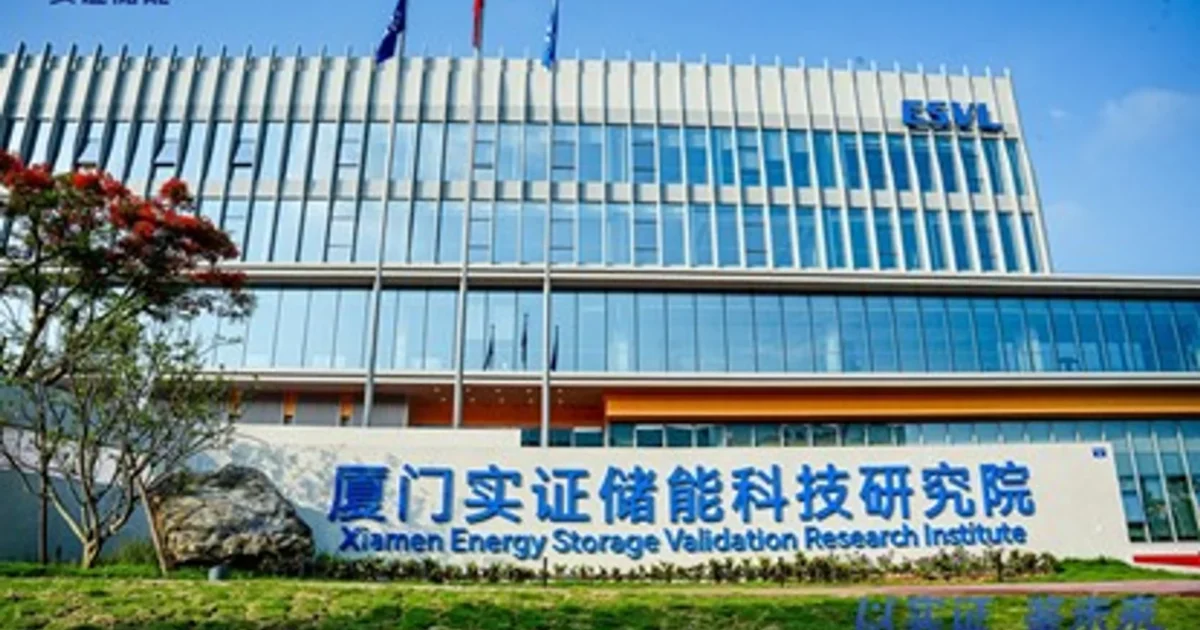
CATL has inaugurated the world’s largest energy storage testbed at its Xiamen headquarters, a facility designed to validate grid-scale battery systems under real-world conditions and accelerate the standardization of energy storage performance benchmarks across the industry.
Background
The Xiamen Energy Storage Testbed represents CATL’s latest move to consolidate its leadership beyond electric vehicle batteries into the rapidly growing stationary energy storage market. Announced on May 28, 2026, the facility is positioned as a comprehensive validation platform for battery energy storage systems (BESS), moving the industry beyond laboratory testing into real-world simulation environments, per PRNewswire Asia.
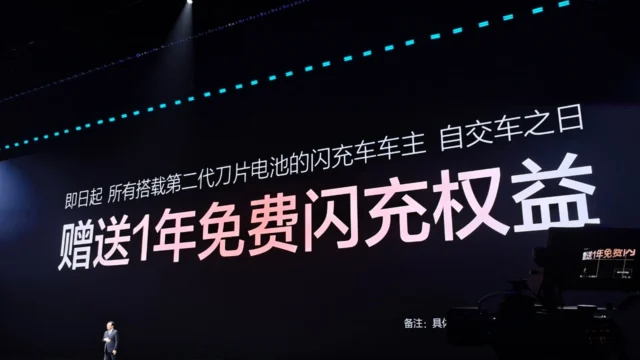
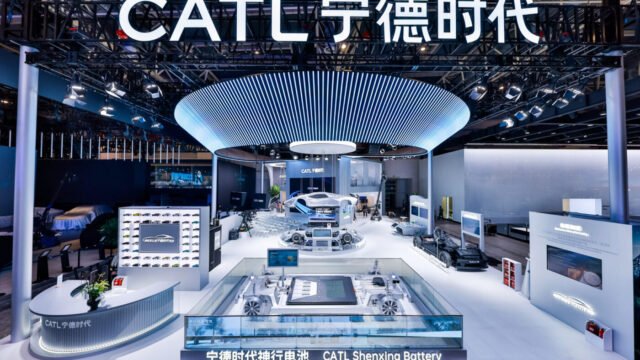
CATL’s energy storage ambitions were on full display at its Beijing Super Technology Day in April 2026, where the company unveiled six new battery products including the third-generation Shenxing battery capable of full charge in six minutes, the Qilin condensed matter battery bringing aviation-grade technology to passenger EVs, and an integrated supercharging and battery swap network plan targeting 4,000 stations across 190 cities by end of 2026, according to Battery-Tech.net.
Key Numbers and Details
The energy storage testbed integrates multiple testing environments that simulate real-world grid conditions, including extreme temperature cycling, rapid charge-discharge patterns, and grid frequency regulation scenarios. While specific capacity figures were not disclosed in the initial announcement, CATL described it as the largest facility of its kind globally, designed to handle comprehensive lifecycle testing of multi-megawatt-hour battery systems.
CATL’s broader energy storage push comes as global demand for grid-scale batteries surges, driven by renewable energy integration needs and grid stability requirements. The company already dominates the global energy storage battery market with over 40% market share in 2025. The testbed will enable CATL to validate new cell chemistries — including its sodium-ion battery technology and the Qilin condensed battery — for stationary applications before commercial deployment.
Industry Impact
The testbed addresses a critical gap in the energy storage industry: the lack of standardized, real-world validation frameworks. Currently, energy storage systems are largely tested in controlled laboratory environments that may not accurately predict performance under variable grid conditions, extreme weather, and multi-year degradation patterns. CATL’s facility could become a de facto industry standard, giving the company additional leverage in setting performance benchmarks that competitors must meet.
The investment also signals CATL’s confidence in the long-term growth of stationary storage, which is expected to outpace EV battery demand growth rates over the next decade. As solar and wind installations accelerate globally, the need for reliable, long-duration energy storage solutions is becoming increasingly critical for grid operators.
What’s Next
CATL is expected to release detailed technical specifications and initial test results from the Xiamen facility in the coming months. The company’s integrated charge-swap network — combining supercharging stations with battery swap capabilities — is on track to reach 4,000 locations by year-end, potentially establishing the largest such network in China. Additional announcements regarding CATL’s international energy storage projects, particularly in Southeast Asia and Europe, are anticipated in the second half of 2026.
Why It Matters Globally
CATL’s investment in the world’s largest energy storage validation center signals a fundamental shift in the battery industry: moving from cell-level testing to system-level, real-world validation. With 10 hectares and a 3 billion RMB investment, the ESVL facility enables accelerated certification of grid-scale storage solutions, which is critical for renewable energy integration globally. As Europe, North America, and Southeast Asia ramp up energy storage deployments, CATL’s testing infrastructure gives Chinese battery makers a significant time-to-market advantage. This facility also raises the bar for safety standards, potentially influencing global regulatory frameworks for BESS (Battery Energy Storage Systems).
FAQ
What is the CATL ESVL facility?
The Energy Storage Validation Laboratory (ESVL) in Xiamen is the world’s largest one-stop energy storage testing and validation platform. Spanning 10 hectares with a 3 billion RMB investment, it provides station-level, real-world validation for grid-scale energy storage systems.
Why is energy storage testing important?
Grid-scale energy storage systems must operate reliably for 15-20 years under varying conditions. Comprehensive testing ensures safety, performance, and longevity before deployment, reducing the risk of thermal runaway, capacity degradation, or system failures in the field.
How does this affect global battery supply chains?
CATL’s testing infrastructure gives Chinese manufacturers a significant advantage in certifying new battery chemistries faster. This accelerates time-to-market for next-generation storage solutions and reinforces China’s dominance in the global battery supply chain.
Sources
- PRNewswire Asia, CATL Launches World’s Largest Energy Storage Testbed
- Battery-Tech.net, CATL rolls out supercharging and battery swap network
- CnEVPost, CATL plans to build over 2,500 swap stations by end-2026