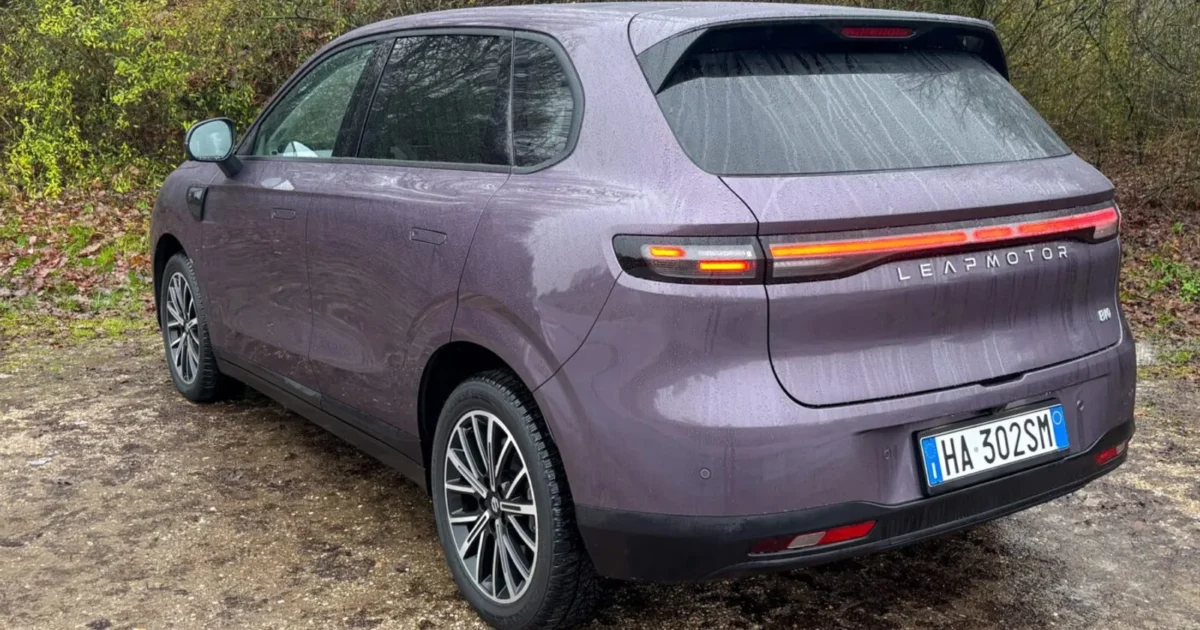
Leapmotor International is set to take over a dedicated production line at Stellantis’ Figueruelas plant in Zaragoza, Spain, for local assembly of the B10 SUV and a new Opel-branded electric vehicle, marking a significant escalation in Chinese EV manufacturing on European soil. Stellantis’ Figueruelas plant in Zaragoza, Spain, set to produce Leapmotor B10. Source: 第一财经 (Yicai)
The Zaragoza production plan is based on CnEVPost coverage of the Stellantis-Leapmotor tie-up, with European manufacturing context from Electrive and Reuters.
Zaragoza Plant: Two Models, One Production Line
On May 8, 2026, Stellantis and Leapmotor announced a deepening of their strategic partnership centered on the Figueruelas factory in Zaragoza, Spain – an Opel stronghold since 1982 that has produced over 10 million vehicles. The two companies are evaluating a new production line that would manufacture both a new Opel C-segment electric SUV and the Leapmotor B10 compact electric SUV. The Leapmotor B10 is scheduled to begin mass production in October 2026, with approximately one-quarter of European B10 sales expected to come from local production at Zaragoza, while the remainder will be shipped as complete vehicles from China. The Opel EV is tentatively planned for a 2028 start, marking the first time Leapmotor’s underlying vehicle architecture will be applied to a European brand’s product. Additionally, a second factory in Villaverde, Madrid – where the Citroën C4 is nearing end-of-life – may be transferred to Leapmotor International for production of an all-new Leapmotor model starting in the first half of 2028.
100,000-Unit Target and 15,000 Overseas
Leapmotor has set ambitious targets for 2026: 100,000 total vehicle sales, with 10,000-150,000 coming from overseas markets. Founder Zhu Jiangming stated that 150,000 overseas units is “very achievable.” In Q1 2026, Leapmotor posted record revenue for a first quarter, though it reported a transitional net loss due to aggressive international expansion investments. The partnership with Stellantis has proven to be Leapmotor’s most important strategic asset. Stellantis acquired approximately 21% of Leapmotor in October 2023 and established Leapmotor International with 51% ownership, giving the Chinese brand exclusive access to Stellantis’ global sales network outside Greater China. The localized production strategy directly addresses the EU’s 20.7% tariff on Chinese-built EVs, which has made direct exports economically challenging.
The Bigger Picture: Chinese EVs Go Local
Leapmotor’s Spanish expansion is part of a broader wave of Chinese automakers setting up European manufacturing bases. According to a report by AlixPartners, Chinese automakers’ overseas production is projected to grow from 1.2 million units last year to 3.4 million by 2030, with manufacturing planned in at least 16 countries. For Stellantis, the arrangement addresses two pressing needs: filling underutilized European capacity (the company posted a EUR 19.21 billion negative industrial free cash flow in Q1 2026) and accessing competitive EV technology at lower development cost. The joint procurement initiative announced alongside the production deal aims to leverage China’s EV supply chain advantages to reduce costs while using European supply chains for resilience.