Quick answer
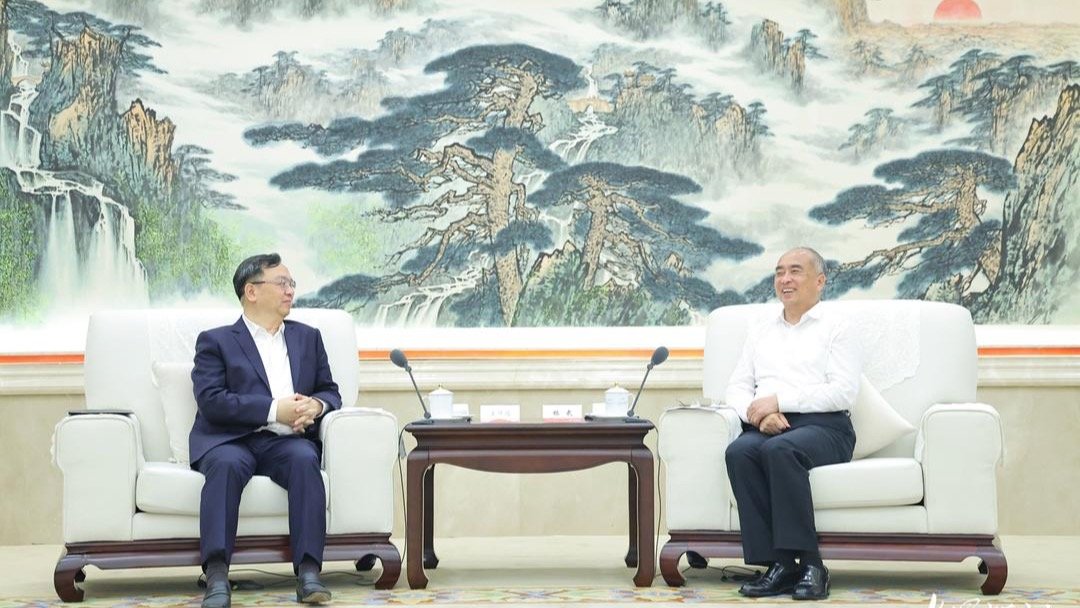
Between March 24 and July 1, 2026, leaders in Hunan, Anhui, Henan, Shandong, Shaanxi and Sichuan met BYD chairman Wang Chuanfu. Official records show a broad contest for BYD investment: vehicle capacity still matters, but provinces are also seeking battery R&D, core components, flash charging, energy storage and stronger local supply chains.
Six high-level meetings in roughly 100 days have put BYD investment in China back at the center of regional industrial policy. The pattern is important, but it is more nuanced than a simple shift “from factories to R&D.” Several provinces still want more production. What has changed is the breadth of what they are asking BYD to place locally.
Verified timeline: six meetings with Wang Chuanfu
The chronology below is based on provincial or official local-government reports, with National Business Daily used as the cross-provincial synthesis.
On mobile, swipe horizontally to compare the meetings.
| Date | Province | Officials | Documented priorities |
|---|---|---|---|
| Mar. 24 | Hunan | Governor Mao Weiming | Capacity, full-chain development, advanced manufacturing, Blade Battery and flash charging |
| Apr. 2 | Anhui | Party Secretary Liang Yanshun; Governor Wang Qingxian | Vehicle production, battery R&D, megawatt flash charging, new technologies and products |
| Apr. 27 | Henan | Party Secretary Liu Ning | Existing projects, vehicle manufacturing, core-component R&D and flash-charging stations |
| Jun. 4 | Shandong | Party Secretary Lin Wu | NEV production, new-generation Blade Battery technology, battery materials and charging services |
| Jun. 26 | Shaanxi | Party Secretary Zhao Yide; Governor Zhao Gang | Vehicle production, advanced manufacturing, technology R&D, power batteries and high-power charging |
| Jul. 1 | Sichuan | Governor Shi Xiaolin | Investment, new production lines, capacity, flash charging, energy storage and aftermarket services |
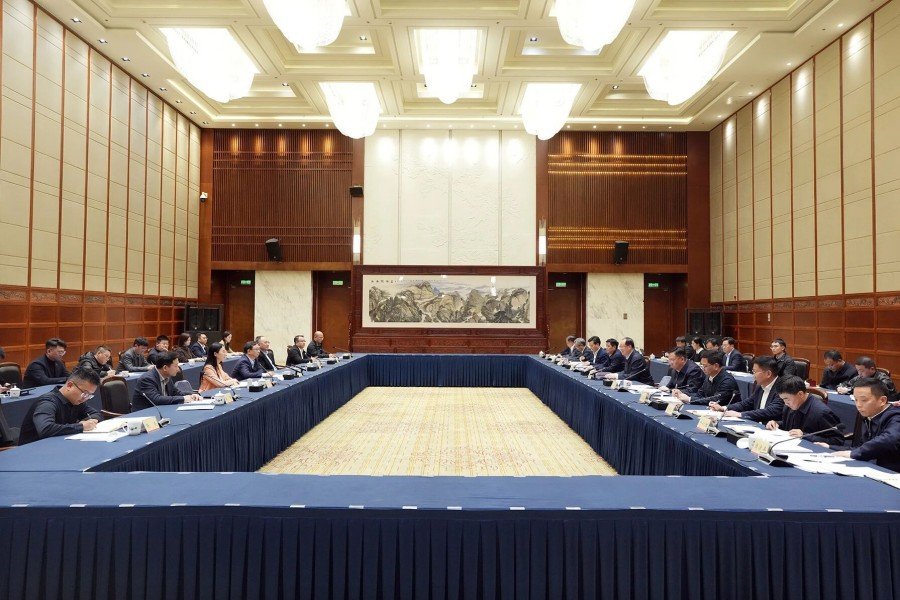
Hunan explicitly called for more capacity and a fuller industrial chain, while BYD said it would introduce second-generation Blade Battery and flash-charging technologies. The Hunan government release therefore documents expansion and technology investment together.
The same mixed pattern appears elsewhere. Anhui’s official report names vehicle production, battery R&D and megawatt flash charging. Henan’s release combines faster project construction with core-component R&D. Shandong’s report covers NEV production, battery technology and charging services. Sichuan’s account includes new production lines and capacity alongside storage and aftermarket services.
How dependent are provinces on BYD output?
National Business Daily estimated “BYD dependency” as output from BYD’s local base divided by total vehicle output in the province. These are media calculations, not official fiscal or employment-dependency measures, but they are a useful indicator of industrial concentration.
On mobile, swipe horizontally to compare the figures.
| Province | Estimated BYD share | 2025 national output rank |
|---|---|---|
| Shaanxi | 58.14% | 8th |
| Henan | 39.90% | Outside top 10 |
| Hunan | 33.82% | 9th |
| Anhui | 21.97% | 1st |
| Shandong | 19.14% | 4th |
The corrected 2025 top-ten order is Anhui, Guangdong, Chongqing, Shandong, Jiangsu, Zhejiang, Shanghai, Shaanxi, Hunan and Hubei. Four of the six provinces in the meeting wave were in that top ten. That does not mean BYD was the “dominant manufacturer” in every one of them; it means BYD’s production footprint is important enough to influence regional rankings.
Shaanxi shows the concentration risk
Shaanxi is the clearest warning. National Business Daily reported that the province’s vehicle output roughly halved in January–May 2026, taking it from eighth place for full-year 2025 to 14th in the first five months of 2026. That is a comparison between different periods, so it should be read as an early-year signal rather than a final annual ranking.
The report attributes part of the weakness to product-cycle and mix changes at BYD’s Xi’an base. This is an analyst assessment, not proof of a single cause. The broader lesson is more defensible: when one automaker accounts for a large share of local output, changes in its model allocation or production schedule can move provincial headline data quickly.
BYD’s 2026 numbers add urgency
BYD’s official May production and sales disclosure shows that the company produced 1,410,884 new-energy vehicles in January–May 2026, down 21.27% year on year, and sold 1,405,039, down 20.32%.
In May alone, BYD sold 383,453 NEVs and reported export volume of 160,644 units. Exports were therefore equivalent to 41.9% of monthly NEV sales, a BYDToday calculation based on the two official figures. This is not the same as saying domestic production fell by 21.27%, and it should not be described as exports’ share of total output.
The stronger overseas contribution helps explain why provinces are competing for more than assembly volume. Export-oriented supply chains, advanced batteries, charging systems and R&D can protect a local industrial base even when individual model cycles change. For the monthly context, see BYDToday’s BYD May 2026 sales analysis and China NEV export report.
What the meetings actually signal
BYDToday analysis
- Capacity remains part of the competition. Hunan and Sichuan explicitly discussed more capacity or production lines.
- The contest is moving up the value chain. Battery R&D, core components, flash charging and energy storage now appear alongside factory investment.
- Concentration creates policy risk. Provinces with high BYD output shares have an incentive to diversify suppliers and attract additional automakers.
The most accurate description is therefore not a completed factory-to-R&D pivot. It is a broader competition for BYD’s industrial ecosystem. Assembly still matters, but provinces increasingly want the technologies, suppliers and infrastructure that make an automotive cluster harder to relocate and less exposed to one production line.
This also changes how BYD can negotiate with local governments. The company can direct different parts of its ecosystem—vehicles, batteries, components, charging or storage—to locations that offer the best industrial fit. Provinces, meanwhile, must decide whether to stabilize BYD output, win higher-value projects or reduce reliance on a single anchor company.
FAQ
Why did six provinces meet BYD chairman Wang Chuanfu in 2026?
The official releases show provinces seeking deeper BYD investment as China’s auto industry becomes more competitive. Their priorities include vehicle production, battery and component R&D, flash-charging networks, storage, supply-chain development and aftermarket services. The meetings reflect competition for both manufacturing volume and higher-value technology projects.
Which province has the highest estimated dependence on BYD output?
National Business Daily estimated that output from BYD’s local base was equivalent to 58.14% of Shaanxi’s total vehicle production in 2025. Henan followed at 39.90% and Hunan at 33.82%. These are media estimates of production concentration, not official measures of tax revenue, employment or GDP dependence.
Have Chinese provinces stopped asking BYD for factories?
No. Hunan explicitly discussed expanding capacity, Sichuan discussed new production lines and more capacity, and Henan emphasized faster construction of existing projects. The change is that factory requests are now paired with battery technology, component R&D, charging infrastructure and supply-chain investment.
What do BYD’s January–May 2026 figures show?
BYD reported cumulative NEV production of 1,410,884 units, down 21.27% year on year, and sales of 1,405,039, down 20.32%. In May, export volume reached 160,644 units, equivalent to 41.9% of monthly NEV sales. The disclosure does not describe the production decline as “domestic production.”
Sources and methodology
This article separates official facts, media estimates and BYDToday analysis. Meeting agendas come from provincial or official local releases; BYD production and sales figures come from the company’s exchange filing; dependency ratios and the six-province synthesis come from National Business Daily.
- National Business Daily: six provinces competing for BYD investment, July 2, 2026.
- Hunan Provincial Government: Hunan–BYD working meeting, March 24, 2026.
- Anhui official report: working talks with Wang Chuanfu, April 2, 2026.
- Henan official report: Liu Ning meets Wang Chuanfu, April 27, 2026.
- Shandong official local report: Lin Wu meets BYD delegation, June 4, 2026.
- Sichuan official report: Shi Xiaolin meets Wang Chuanfu, July 1, 2026.
- BYD: May 2026 production and sales disclosure.