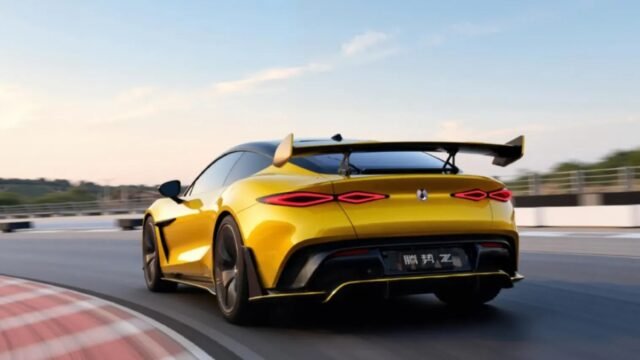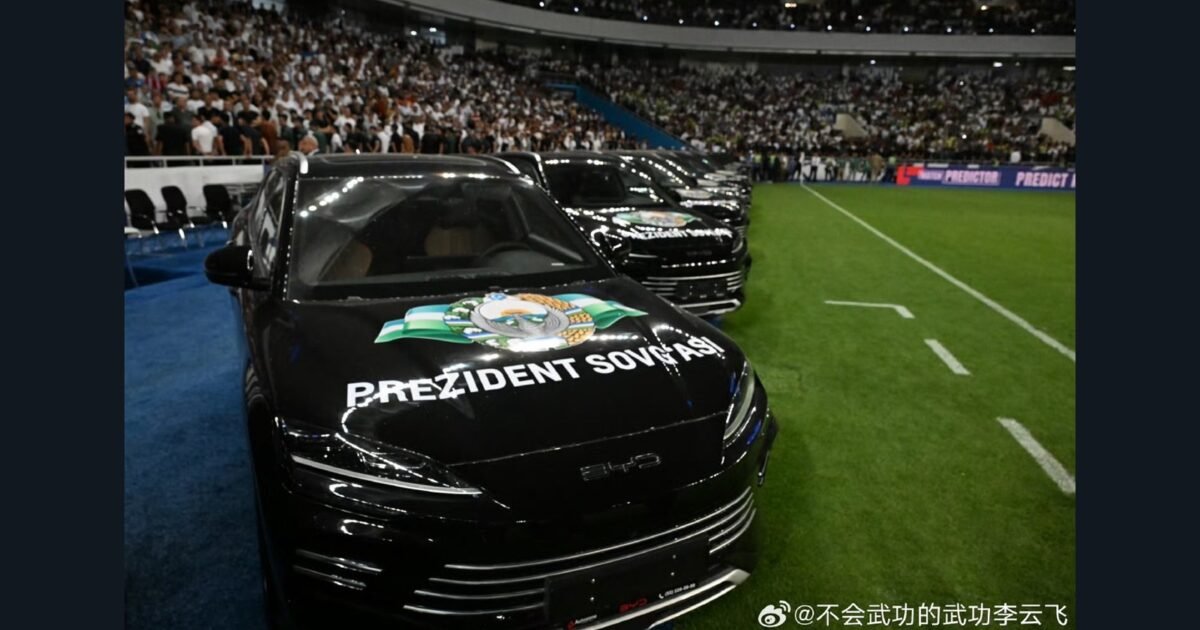
BYD announced on June 11, 2026 — the opening day of the 2026 FIFA World Cup — that it has become the broadcast “Chief Partner” for the tournament through a collaboration with Chinese social media platform Xiaohongshu, covering all 104 live matches. Simultaneously, BYD’s sub-brands Denza and Fang Cheng Bao were named special broadcast partners for China Central Television’s (CCTV) World Cup coverage, according to a 163.com report on World Cup automotive sponsors.
The announcement places BYD at the center of the most aggressive World Cup marketing campaign ever mounted by Chinese automakers. At least eight Chinese automotive brands have secured World Cup-related sponsorships, partnerships, or ambassador deals for the 2026 tournament co-hosted by the United States, Canada, and Mexico.
China’s Automotive World Cup Offensive
The scale of Chinese automaker involvement is unprecedented. Geely Galaxy secured a CCTV broadcast partnership with exclusive title sponsorship of the popular “Grand Football Feast” program. Changan Automobile became the official global partner of the Portuguese national team for both the 2026 and 2030 World Cups. Chery’s Ebro brand was named official sponsor and designated vehicle provider for the Spanish national team. Great Wall Motor’s WEY brand signed Cristiano Ronaldo as its brand ambassador — one of the most recognizable athletes in the tournament.
Beyond sponsorship, Chinese commercial vehicle manufacturers are providing critical infrastructure. Yutong Bus deployed over 700 pure electric buses for tournament transportation in Mexico City, while Zhongtong Bus supplied 42 N12 electric buses for the same market. Waymo is providing robotaxi services in the Houston tournament zone.
Strategic Timing and Global Ambitions
The World Cup partnership blitz comes at a critical inflection point for Chinese automakers’ global expansion. With NEV exports surging 112.6% year-on-year in May 2026, according to CPCA data, brands are racing to build international recognition. The World Cup, expected to reach over 5 billion cumulative viewers globally, offers an unmatched platform for brand awareness — particularly in markets like Latin America, the Middle East, and Southeast Asia where Chinese automakers are aggressively expanding.
BYD’s multi-layered approach is especially strategic. The Xiaohongshu partnership targets China’s domestic audience of over 300 million monthly active users, while the CCTV broadcast partnership through Denza and Fang Cheng Bao reaches the broader Chinese TV audience. For international viewers, the sheer presence of Chinese automotive brands across the tournament’s broadcast, venue operations, and team sponsorships creates a sustained visibility that no single ad campaign could achieve.
Industry Impact
The 2026 World Cup marks a turning point in global automotive marketing. Where previous tournaments were dominated by official FIFA partners Hyundai-Kia and legacy European brands, the 2026 edition features Chinese brands across every sponsorship tier: broadcast, team, player, and infrastructure. This mirrors the broader shift in the automotive industry, where Chinese manufacturers are transitioning from product exporters to global brand builders.
The scale also reveals the financial firepower Chinese automakers now command. BYD’s Q1 2026 net profit of 20.74 billion yuan ($3.06 billion) exceeds the combined net income of several legacy automakers, providing the resources for simultaneous global marketing campaigns, R&D investment, and aggressive international expansion.
Why It Matters Globally
The World Cup marketing blitz signals that Chinese automakers are no longer content competing on price and specifications — they are now investing in the emotional brand-building that drives long-term consumer loyalty. For a generation of global consumers, the 2026 World Cup may be the moment they first encounter Chinese automotive brands not as low-cost alternatives, but as aspirational partners to the world’s most-watched sporting event.
The strategy also reflects lessons learned from Korean automakers’ trajectory. Hyundai-Kia used World Cup sponsorships (beginning in 2002) to transform from budget brands into globally respected competitors. Chinese automakers appear to be following the same playbook — but on a scale and at a pace that far exceeds what their Korean counterparts attempted two decades ago.
What’s Next
The 2026 World Cup runs from June 11 through July 19, giving Chinese automakers a 39-day window of sustained global visibility. Post-tournament brand awareness surveys will provide the first quantitative measure of the campaign’s effectiveness. BYD’s next major global marketing milestone will likely be the 2026 Paris Motor Show in October, where the company is expected to unveil new Europe-specific models.
FAQ
Is BYD an official FIFA World Cup sponsor?
No. The official automotive sponsor of the 2026 FIFA World Cup is Hyundai-Kia, which provides 660 official vehicles. BYD’s partnerships are at the broadcast level — as Chief Partner for Xiaohongshu’s streaming coverage and as a CCTV broadcast partner through the Denza and Fang Cheng Bao brands.
Why are so many Chinese automakers sponsoring the World Cup?
The World Cup is the most-watched sporting event globally (5+ billion cumulative viewers), offering unmatched brand visibility. For Chinese automakers aggressively expanding overseas, the tournament provides a platform to introduce their brands to consumers in priority markets like Latin America, the Middle East, and Southeast Asia.
Which Chinese automaker has the biggest World Cup presence?
BYD has the broadest presence through three simultaneous partnerships (Xiaohongshu Chief Partner + Denza CCTV + Fang Cheng Bao CCTV). Yutong Bus has the largest physical footprint with 700+ electric buses serving Mexico City. Changan has the longest-term commitment as Portugal’s partner through 2030.