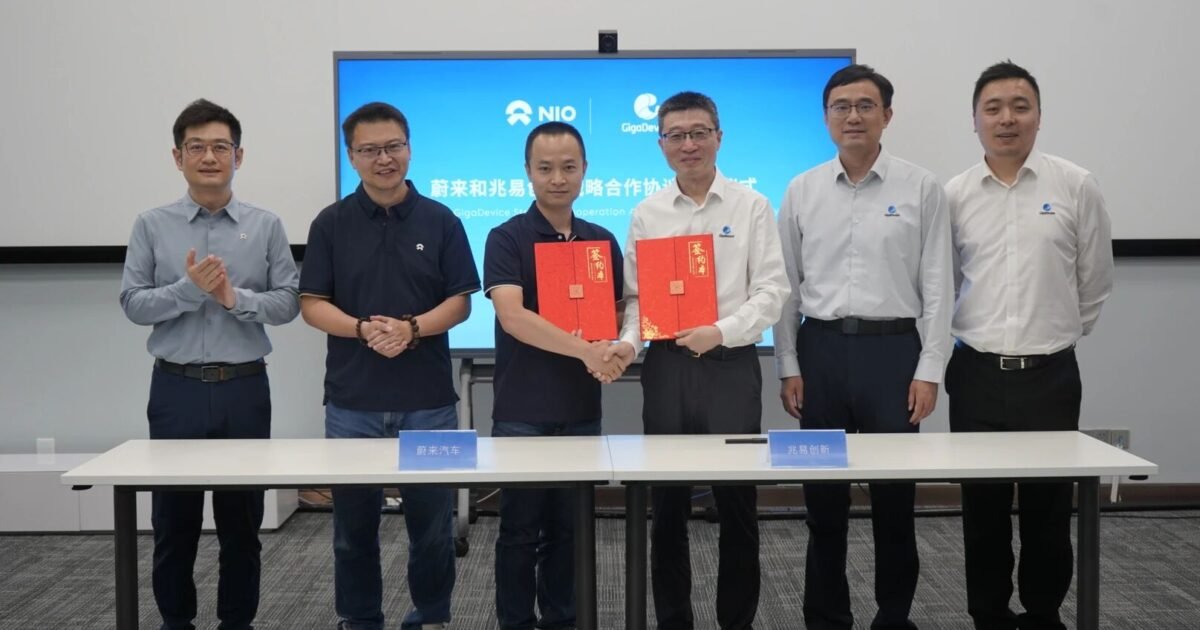
NIO has signed a strategic partnership with GigaDevice Semiconductor (603986.SH), one of China’s leading chipmakers, to co-develop automotive-grade semiconductors. The agreement, announced on June 5, 2026, reflects a broader industry trend toward tighter integration between automakers and chip designers as vehicle computing power becomes a critical competitive differentiator.
The partnership will focus on co-developing chips for NIO’s smart driving systems, in-vehicle infotainment, and battery management applications. GigaDevice brings expertise in microcontrollers, storage chips, and sensors — components that are increasingly important as vehicles evolve into software-defined platforms requiring thousands of semiconductors each.
Strategic Context
The NIO-GigaDevice partnership reflects the automotive industry’s growing concern over semiconductor supply chain resilience. The global chip shortage of 2021-2023 exposed the vulnerability of automakers dependent on a concentrated supplier base, and Chinese companies in particular have been accelerating domestic chip development in response to export controls and geopolitical tensions.
NIO has already invested heavily in self-developed technology, including its Shenji NX9031 autonomous driving chip and SkyOS vehicle operating system. The GigaDevice partnership adds a complementary dimension — leveraging a specialist chipmaker’s manufacturing expertise and IP portfolio rather than building everything from scratch in-house.
Per Gasgoo’s reporting, the partnership will establish a long-term collaborative framework covering everything from early-stage chip architecture design to mass production qualification. This reflects a shift from the traditional automotive procurement model — where chip selection happens late in the vehicle development cycle — to a co-development model where chip and vehicle are designed in parallel.
Industry Trend
NIO is not alone in pursuing chip partnerships. Tesla designs its own FSD chips, BYD has invested in domestic semiconductor capabilities, and XPeng has developed its own autonomous driving silicon. The difference with the NIO-GigaDevice approach is the explicit partnership structure — combining an automaker’s domain knowledge with a chipmaker’s fabrication expertise — rather than attempting full vertical integration.
GigaDevice, listed on the Shanghai Stock Exchange, has been expanding its automotive portfolio rapidly, supplying microcontrollers and memory chips to multiple Chinese automakers. The company’s stock rose on the partnership announcement, reflecting investor confidence in the automotive chip growth thesis.
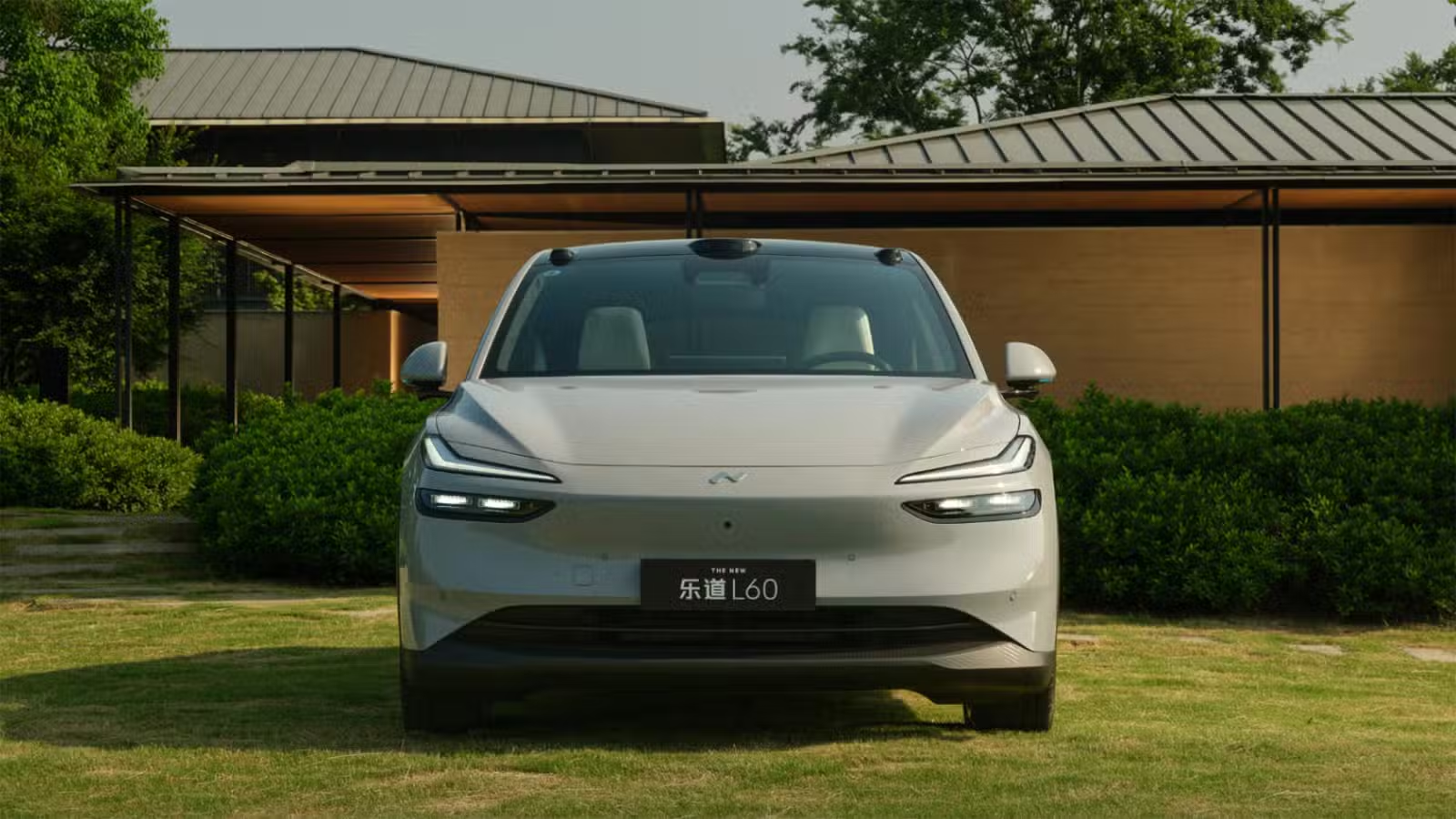
For NIO, the timing is strategic. The company launched its ES9 flagship SUV in June 2026 and is preparing the refreshed ONVO L60 with 106 upgrades for a June 11 launch. Each new model increases the demand for custom silicon that can differentiate the driving experience and reduce dependency on third-party suppliers.
Related: NIO ES9 launch | NIO ONVO L60 refresh